Imagine you’re preparing for your next ISO surveillance audit.
Your documentation is complete.
Internal audits are finished.
Risk assessments have been updated.
Then the auditor asks one unexpected question:
“How has your organization determined whether climate change is a relevant issue for your management system?”
Would your team have a documented answer?
For many organizations, the answer is no.
And that’s becoming a growing compliance concern.
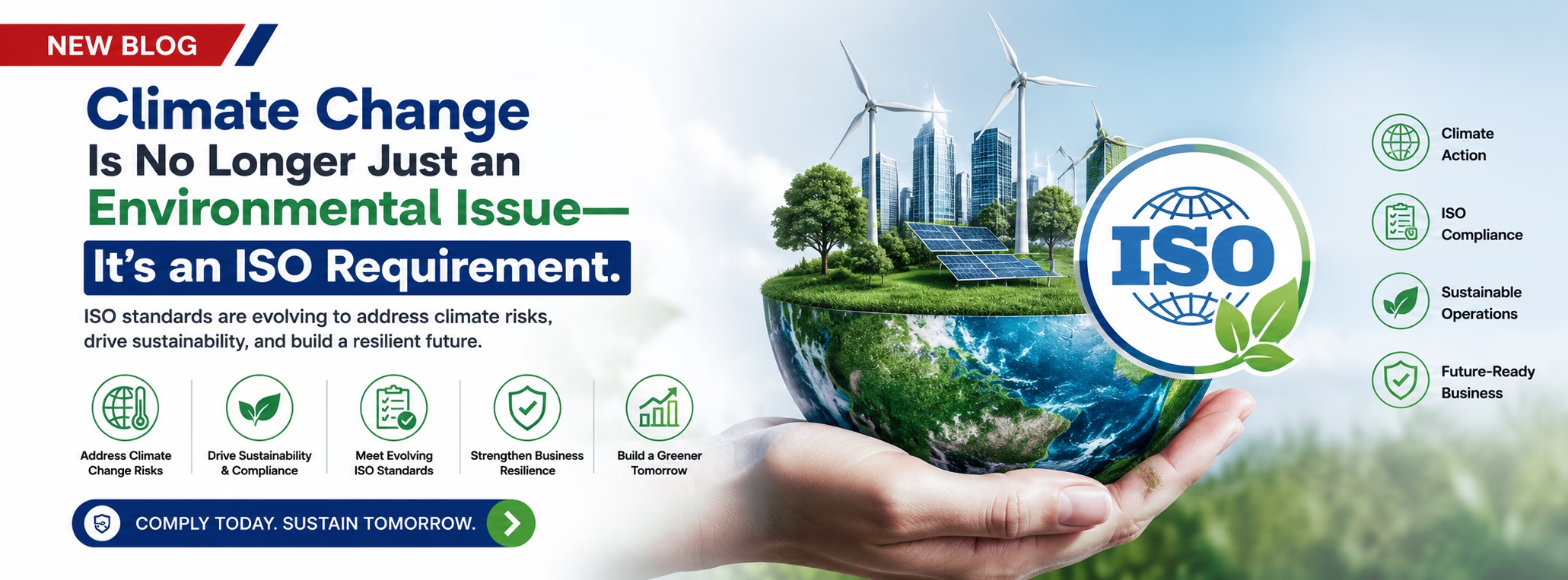
Climate change is no longer viewed solely as an environmental responsibility. Today, it is recognized as a strategic business risk that can affect operations, supply chains, infrastructure, information security, employee safety, regulatory compliance, and long-term resilience.
To reflect this reality, ISO introduced amendments requiring organizations using many management system standards to consider whether climate change is a relevant issue within their organizational context.
The important point is this:
Organizations are expected to consider climate change—not automatically implement environmental projects.
Understanding that distinction is essential for maintaining an effective management system.
Why Has ISO Introduced Climate Change Considerations?
Organizations across every industry are experiencing climate-related challenges.
These include:
- Extreme weather events
- Floods affecting facilities
- Heatwaves disrupting operations
- Power shortages
- Supply chain interruptions
- Water scarcity
- Increasing regulatory expectations
- Customer sustainability requirements
Even businesses that operate entirely in offices or cloud environments may experience indirect impacts through vendors, utilities, logistics providers, or critical infrastructure.
Recognizing these risks, ISO updated the Harmonized Structure used by many management system standards to encourage organizations to evaluate climate change when determining internal and external issues.
The amendment encourages organizations to think strategically about how climate-related factors could influence their ability to achieve intended management system outcomes.
Which ISO Standards Are Affected?
Climate change considerations apply across numerous ISO management system standards, including:
- ISO 9001 – Quality Management Systems
- ISO 14001 – Environmental Management Systems
- ISO 27001 – Information Security Management Systems
- ISO 22301 – Business Continuity Management Systems
- ISO 45001 – Occupational Health & Safety
- ISO 50001 – Energy Management Systems
- ISO 22000 – Food Safety Management Systems
While each standard has a different objective, they now share a common expectation:
Organizations should determine whether climate change is a relevant issue within the context of their management system.
What Do the Amendments Actually Mean?
One common misconception is that every certified organization must create a climate strategy or publish sustainability reports.
That is not what the amendment requires.
Instead, organizations should:
- Consider climate change during context analysis
- Evaluate whether climate-related issues are relevant
- Consider the expectations of interested parties
- Document their conclusions where appropriate
- Integrate relevant risks into existing management processes
The focus is on thoughtful evaluation—not a one-size-fits-all solution.
How Climate Change Can Affect Different ISO Standards
ISO 27001: Information Security
Climate events can influence information security in several ways.
Examples include:
- Data center disruptions caused by flooding
- Extended power outages affecting critical systems
- Network interruptions during severe weather
- Physical security risks at facilities
- Increased reliance on remote work during emergencies
Organizations should evaluate whether these scenarios introduce new information security risks and whether existing controls remain effective.
ISO 9001: Quality Management
Climate-related disruptions may affect:
- Supplier reliability
- Product quality
- Manufacturing schedules
- Customer delivery commitments
- Operational continuity
Quality objectives may need additional resilience planning where climate risks are significant.
ISO 14001: Environmental Management
For environmental management systems, climate considerations often align naturally with existing environmental objectives.
Organizations may evaluate:
- Greenhouse gas impacts
- Resource efficiency
- Climate adaptation
- Environmental resilience
- Regulatory developments
ISO 22301: Business Continuity
Business continuity planning increasingly includes:
- Flood response
- Extreme weather scenarios
- Heatwave preparedness
- Utility failures
- Supply chain disruption
Climate risks often become business continuity risks.
Questions Every Organization Should Ask
When reviewing your management system, consider:
✔ Could extreme weather interrupt operations?
✔ Are critical suppliers located in climate-sensitive regions?
✔ Would prolonged power failures affect service delivery?
✔ Could customers experience delays due to climate events?
✔ Have climate-related regulatory expectations changed?
✔ Does leadership understand climate-related business risks?
✔ Are these issues reflected in management reviews?
These questions help organizations identify whether climate change is relevant to their operations.
Common Mistakes Organizations Make
Mistake 1: Assuming Climate Change Only Applies to Manufacturers
Service providers, IT companies, financial institutions, healthcare organizations, and SaaS businesses all depend on infrastructure, vendors, and utilities that can be affected by climate-related disruptions.
Mistake 2: Ignoring Organizational Context
Many organizations update risk registers but forget to review external issues affecting the management system.
Context analysis remains a foundational ISO requirement.
Mistake 3: No Documentation
Even if climate change is determined to have limited relevance, organizations should be able to explain how that conclusion was reached.
Mistake 4: Treating Climate as Only an Environmental Topic
Climate considerations may influence:
- Risk management
- Information security
- Business continuity
- Supply chain management
- Operational resilience
- Strategic planning
A Practical Climate Readiness Checklist
Score one point for each “Yes.”
| Question | Yes / No |
|---|---|
| Have you reviewed climate change as an external issue? | ☐ |
| Has leadership discussed climate-related business risks? | ☐ |
| Are climate risks reflected in risk assessments where relevant? | ☐ |
| Have key suppliers been evaluated for climate-related disruptions? | ☐ |
| Does your business continuity plan consider extreme weather events? | ☐ |
| Are interested-party expectations regarding climate understood? | ☐ |
| Can your organization explain its climate-related decisions during an audit? | ☐ |
Your Score
0–2: Climate considerations may not yet be integrated into your management system.
3–5: You have started addressing relevant issues but may benefit from a structured review.
6–7: Your organization appears well positioned to demonstrate how climate considerations have been evaluated within the scope of your management system.
How to Prepare Before Your Next ISO Audit
A structured approach can help ensure your management system reflects current ISO expectations.
Consider the following actions:
- Review your organization’s internal and external context.
- Identify climate-related business risks relevant to your operations.
- Update risk assessments where appropriate.
- Review interested-party needs and expectations.
- Discuss findings during management review meetings.
- Update documented information if changes are made.
- Train key stakeholders on the amended ISO requirements.
- Verify readiness through an internal audit or gap assessment.
These steps help demonstrate that climate-related issues have been considered thoughtfully and proportionately.
Climate Readiness Is About Business Resilience
Climate change is no longer viewed solely through the lens of environmental responsibility. It is increasingly recognized as a factor that can influence operational continuity, customer commitments, regulatory expectations, information security, and long-term organizational resilience.
For ISO-certified organizations, the objective is not to create unnecessary documentation but to ensure that management systems remain relevant to today’s evolving business environment.
Organizations that proactively evaluate climate-related issues are often better prepared to respond to disruptions, support strategic decision-making, and demonstrate continual improvement during audits.
Final Thoughts
The latest ISO amendments encourage organizations to broaden their understanding of business risk.
Rather than asking “Do we need a climate program?”, organizations should ask:
“Could climate-related issues affect our ability to achieve the intended outcomes of our management system?”
Answering that question with evidence, analysis, and appropriate documentation will strengthen both your compliance posture and your organizational resilience.
Ready to Review Your ISO Management System?
As ISO requirements continue to evolve, periodic reviews help ensure your management system remains aligned with current expectations.
Prime Infoserv supports organizations with:
- ISO Gap Assessments
- Internal Audits
- ISO 27001, ISO 9001, ISO 14001, ISO 22301 & Integrated Management System Consulting
- Risk Assessments
- Documentation Review
- Management Review Support
- Audit Readiness Assessments
Whether you’re preparing for a surveillance audit, recertification, or implementing a new management system, our consultants can help you identify gaps and strengthen your ISO compliance with practical, business-focused guidance.
Connect with Call now: 9147712576 Prime Infoserv to assess your ISO management system‘s readiness for today’s evolving compliance landscape.