
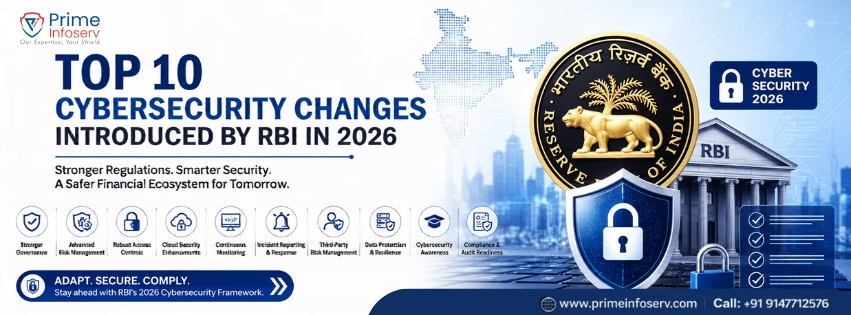
Is Your Bank Ready for RBI’s Biggest Cybersecurity Overhaul?
Cyber threats are evolving faster than ever—and so are regulatory expectations.
With the introduction of the Reserve Bank of India (Commercial Banks – Cybersecurity, Technology Risk, Resilience and Assurance Framework) Directions, 2026, RBI has set a stronger benchmark for how commercial banks must manage cyber risk, strengthen operational resilience, and protect customer trust.
These directions go beyond traditional compliance. They encourage banks to adopt a proactive, risk-based approach to cybersecurity while embedding resilience into every aspect of technology operations.
In this blog, we’ll explore the top 10 cybersecurity changes introduced by RBI in 2026 and what they mean for commercial banks.
1. Stronger Cybersecurity Governance
One of the biggest changes is the emphasis on board-level cybersecurity governance.
Banks are expected to establish clear governance structures where senior management actively oversees cybersecurity strategies, policies, and risk management.
Why it matters
Cybersecurity is no longer just an IT responsibility—it is a business responsibility.
2. Risk-Based Technology Management
RBI encourages banks to identify, assess, monitor, and reduce technology risks continuously rather than relying on periodic reviews.
Banks should evaluate risks across:
- Core banking systems
- Cloud infrastructure
- Digital banking platforms
- Third-party vendors
- Customer-facing applications
This enables organizations to respond to emerging threats more effectively.
3. Cyber Resilience Takes Priority
Preventing attacks is important—but so is recovering quickly.
The RBI framework places greater emphasis on cyber resilience, ensuring banks can continue operations even during cyber incidents.
Key focus areas include:
- Business continuity
- Disaster recovery
- Backup strategies
- Recovery testing
The objective is to minimize business disruption and customer impact.
4. Continuous Security Monitoring
Instead of relying solely on scheduled assessments, banks are expected to maintain continuous visibility into their security environment.
This includes:
- Real-time monitoring
- Threat detection
- Security analytics
- Threat intelligence
Continuous monitoring helps identify suspicious activities before they escalate into major incidents.
5. Improved Incident Response Framework
The new directions reinforce the importance of having a structured incident response process.
Banks should be prepared to:
- Detect incidents quickly
- Contain threats
- Recover operations efficiently
- Meet regulatory reporting obligations
A well-defined response plan significantly reduces the impact of cyber incidents.
6. Enhanced Third-Party Risk Management
Banks increasingly rely on vendors, cloud providers, fintech partners, and outsourced service providers.
RBI now expects organizations to strengthen oversight of these third parties by assessing security controls, monitoring risks, and ensuring compliance throughout the relationship.
Third-party security is now an essential part of enterprise cybersecurity.
7. Operational Resilience Becomes a Core Requirement
Operational resilience is no longer optional.
Banks should regularly test their ability to withstand technology failures, cyberattacks, and operational disruptions.
This includes:
- Scenario testing
- Crisis management
- Business continuity exercises
- Disaster recovery drills
The goal is to maintain critical banking services under all circumstances.
8. Greater Focus on Documentation and Assurance
RBI highlights the importance of maintaining proper documentation for cybersecurity governance and compliance.
Banks should maintain evidence of:
- Policies
- Risk assessments
- Security reviews
- Incident records
- Compliance activities
Strong documentation simplifies audits and demonstrates regulatory readiness.
9. Better Integration of Technology and Cyber Risk
Technology decisions and cybersecurity decisions must work together.
Organizations are expected to integrate cybersecurity into:
- Technology implementation
- System upgrades
- Digital transformation initiatives
- Vendor onboarding
- Infrastructure modernization
Security should be embedded from the beginning—not added later.
10. Compliance Becomes an Ongoing Process
Perhaps the most important shift is that cybersecurity compliance is no longer viewed as a one-time exercise.
Banks are expected to:
- Continuously assess risks
- Improve security controls
- Monitor compliance
- Review governance
- Adapt to emerging cyber threats
Cybersecurity becomes a continuous improvement journey rather than an annual audit requirement.
Why These Changes Matter
The RBI Cybersecurity Directions 2026 aim to help commercial banks:
- Strengthen cyber resilience
- Improve governance and accountability
- Reduce technology-related risks
- Enhance customer trust
- Ensure uninterrupted banking services
- Build a stronger security culture
Ultimately, the framework helps financial institutions become more resilient against today’s rapidly evolving cyber threat landscape.
How Prime Infoserv Can Help
Navigating evolving regulatory requirements can be challenging without the right expertise.
Prime Infoserv helps commercial banks and financial institutions:
- RBI Cybersecurity Readiness Assessments
- Technology Risk Assessments
- Vulnerability Assessment & Penetration Testing (VAPT)
- Cybersecurity Governance Consulting
- Regulatory Compliance Advisory
- Security Gap Analysis
- Incident Response Planning
- Operational Resilience Consulting
- Information Security Management (ISO 27001)
- Continuous Security Improvement Programs
Our experts work closely with organizations to strengthen cybersecurity, improve resilience, and achieve regulatory compliance with confidence.
Final Thoughts
The RBI Cybersecurity Directions 2026 represent a significant step toward building a more secure and resilient banking ecosystem in India.
Rather than treating cybersecurity as a compliance checklist, banks should view these directions as an opportunity to strengthen governance, improve operational resilience, and enhance customer trust.
Organizations that adopt these practices proactively will be better positioned to manage emerging cyber threats while supporting secure digital transformation.
Ready to Strengthen Your Bank’s Cyber Resilience?
Whether you’re assessing your current cybersecurity posture or preparing for RBI compliance, Prime Infoserv can help you every step of the way.
📞 Book a Security Consultation today : 9147712576 to identify gaps, strengthen your cybersecurity framework, and build a resilient, future-ready banking environment.