In today’s digital world, protecting information is no longer optional—it’s essential. Whether you run a small startup or a large enterprise, cyber risks like data breaches, theft, and system failures can seriously impact your business. This is where ISO 27001 comes in.
If you’re new to cybersecurity standards and want a clear, beginner-friendly understanding of ISO 27001 and how it works in real companies, this guide breaks it down in simple terms.
What is ISO 27001?
ISO 27001 is an internationally recognized cybersecurity standard published by ISO (International Organization for Standardization). It provides a structured framework for managing and protecting sensitive company information.
It is not:
- Only for large companies
- Only for IT departments
- Just about writing policies and documents
Instead, it is a complete Information Security Management System (ISMS) that helps organizations manage risks systematically.
Core Purpose of ISO 27001
The standard is built around three key principles of information security:
1. Confidentiality
Ensures that information is accessible only to authorized individuals.
Example: Your bank account details should only be visible to you and authorized bank staff—not outsiders.
2. Integrity
Ensures that data remains accurate and unchanged unless authorized.
Example: Your bank balance and transaction records must always be correct and tamper-free.
3. Availability
Ensures that information and systems are accessible when needed.
Example: You should be able to access your banking app anytime without system downtime.
How Organizations Protect Information
To reduce cybersecurity risks, ISO 27001 promotes four types of security controls:
1. Organizational Controls
Policies and rules that define how security is managed.
Example: Rules stating employees should not leave laptops unattended in vehicles.
2. Technological Controls
Security tools and systems.
Example: Encryption, strong passwords, two-factor authentication, backups.
3. People Controls
Training and awareness for employees.
Example: Teaching staff how to identify phishing emails or follow safe device usage practices.
4. Physical Controls
Protecting physical devices and infrastructure.
Example: Laptop locks, secure storage, restricted office access.
Why ISO 27001 is Important for Businesses
Managing security becomes complex as organizations grow—more employees, more systems, and more data.
ISO 27001 helps by providing a structured system to handle this complexity through an ISMS (Information Security Management System).
How ISO 27001 Works (ISMS Framework)
The implementation of ISO 27001 is based on a few key components:
1. Risk Assessment & Treatment
Organizations identify risks and decide how to manage them.
2. Security Controls Selection
ISO 27001 provides a catalog of controls (commonly referred to as Annex A controls) that organizations can apply based on their risks.
3. Continuous Improvement
Security is regularly reviewed and improved over time.
4. Internal Audits
Ensures that policies and controls are actually being followed.
5. Management Involvement
Top management plays a key role in driving cybersecurity strategy.
Who Can Implement ISO 27001?
ISO 27001 is flexible and can be applied to:
- Small businesses
- IT companies
- Financial institutions
- Healthcare organizations
- Large enterprises
Any organization that handles sensitive data can benefit from it.
Key Benefits of ISO 27001
Implementing ISO 27001 offers several advantages:
- Stronger protection against cyber threats
- Better risk management
- Increased customer trust
- Compliance with global security standards
- Improved internal processes
- Competitive advantage in the market
It also allows companies to become certified, proving their commitment to security.
Final Thoughts
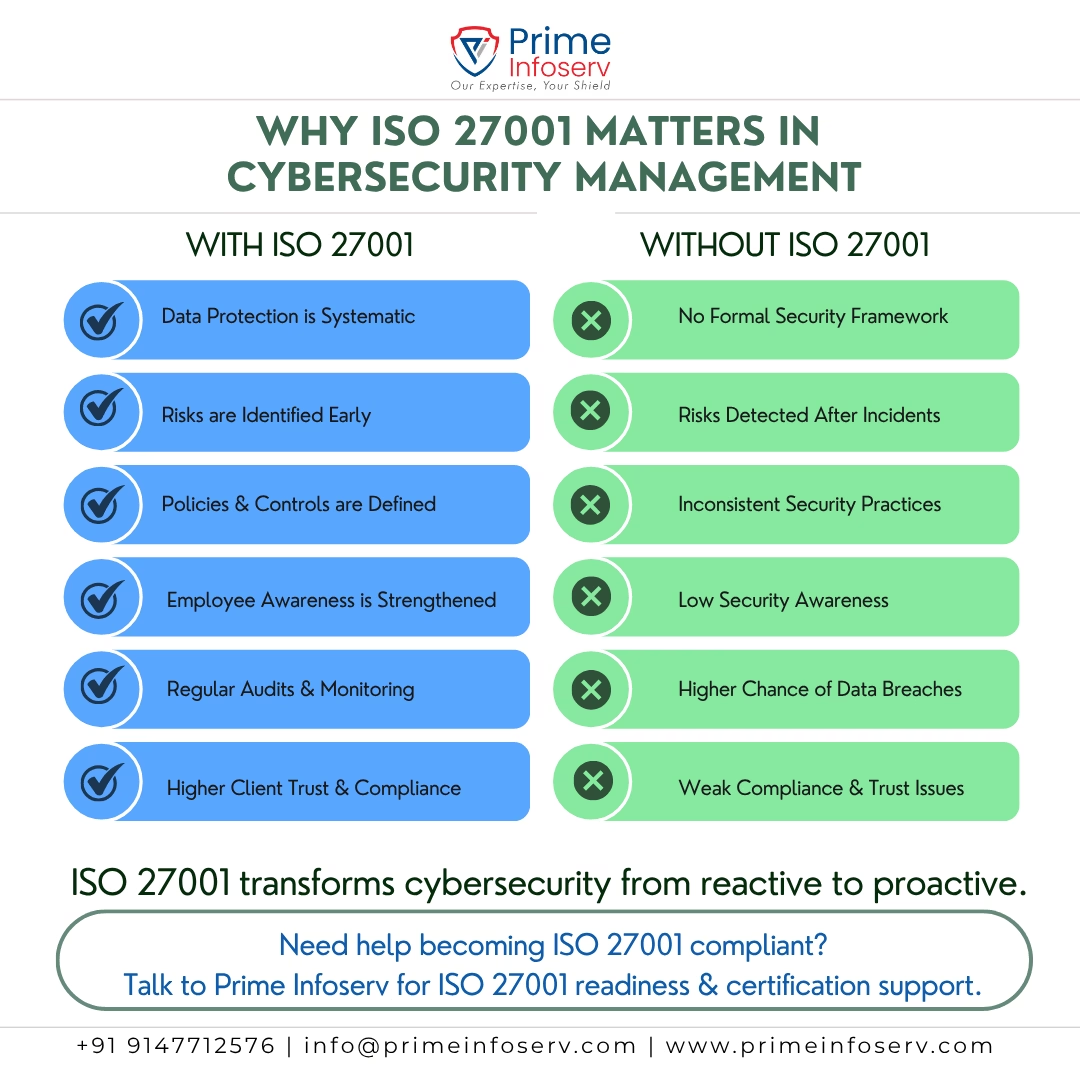
ISO 27001 is not just a cybersecurity framework—it is a complete approach to managing information security in a structured and reliable way.
It helps organizations:
- Identify risks
- Apply the right controls
- Continuously improve security
- Build trust with customers
In a world where data is one of the most valuable assets, adopting ISO 27001 is one of the most effective steps a business can take toward long-term security and resilience.
How Prime Infoserv Can Help You
Implementing ISO 27001 can feel complex—but you don’t have to do it alone. At Prime Infoserv, we help organizations simplify their cybersecurity journey by guiding them through every step of ISO 27001 readiness and implementation, including ISO 27001 certification in Kolkata.
From risk assessment and gap analysis to policy development, control mapping, and audit preparation, we ensure your organization builds a strong, compliant, and practical Information Security Management System (ISMS) aligned with ISO 27001 standards.
Whether you are just starting or preparing for certification, we help you turn cybersecurity requirements into a structured, manageable, and business-friendly process.
Need support with ISO 27001 certification in Kolkata? Talk to Prime Infoserv and strengthen your security with confidence. Call +91 9147712576 or Mail : info@primeinfoserv.com