Every Email Account Holds More Value Than You Think
Imagine giving a cybercriminal access to your personal diary, banking details, customer records, business conversations, passwords, and sensitive documents—all at once.
For many people and organizations, that’s exactly what an email account contains.
While businesses continue investing in advanced cybersecurity solutions, email remains one of the most targeted attack vectors for cybercriminals. Whether it’s a phishing email, a sophisticated business email compromise (BEC) attack, or credential theft, attackers understand that gaining access to an email account can open the door to a wealth of valuable information.
The reality is simple:
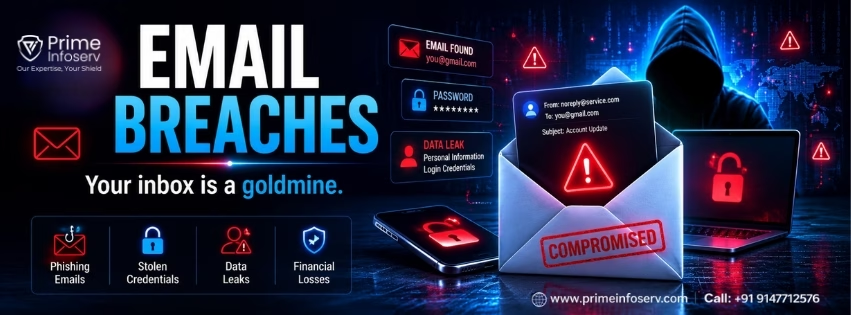
Your inbox isn’t just a communication tool—it’s a goldmine of data.
Why Cybercriminals Love Email Accounts
Most email accounts contain far more than messages.
They often store:
- Personal information
- Financial records
- Customer data
- Login credentials
- Password reset links
- Business contracts
- Confidential conversations
- Cloud storage access
Once attackers gain access, they can use this information for identity theft, financial fraud, espionage, or launching further cyber attacks.
This is why email security remains one of the most critical components of modern cybersecurity.
The Rise of Phishing and Email Phishing Attacks
One of the most common methods used by attackers is phishing.
A phishing email is designed to trick users into:
- Revealing passwords
- Downloading malware
- Opening malicious links
- Sharing sensitive information
Modern email phishing campaigns have become increasingly sophisticated. Attackers often impersonate trusted brands, colleagues, vendors, or even senior executives.
What makes phishing particularly dangerous is that it relies on human behavior rather than technical vulnerabilities.
A single click on a malicious link can compromise an entire organization’s account security.
Business Email Compromise: A Growing Threat
Business Email Compromise (BEC) has become one of the most financially damaging cyber threats worldwide.
In a typical business email compromise attack, cybercriminals gain access to or impersonate a legitimate business email account and use it to:
- Request fraudulent payments
- Redirect invoices
- Steal sensitive information
- Manipulate employees
Because these emails often appear legitimate, employees may unknowingly approve transactions or share confidential data.
For many organizations, a successful business email compromise attack can lead to significant financial losses and reputational damage.
How Email Breaches Lead to Larger Cyber Attacks
An email compromise rarely ends with a single account.
Once attackers gain access, they often use the account as a launching point for larger cyber attacks.
These may include:
Data Breaches
Attackers can access sensitive customer, employee, and business information, potentially leading to a major data breach.
Ransomware Attacks
Compromised email accounts are frequently used to distribute ransomware through malicious attachments or phishing campaigns.
Identity Theft
Personal information found within email accounts can be used to commit identity theft and financial fraud.
Credential Theft
Attackers often search inboxes for login credentials, password reset links, and authentication details that can provide access to additional systems.
Why Password Security Matters More Than Ever
Weak passwords remain one of the biggest contributors to email compromises.
Many users still:
- Reuse passwords across multiple platforms
- Use predictable passwords
- Store passwords insecurely
Strong password security practices can significantly reduce risk.
Organizations should encourage:
- Unique passwords for every account
- Multi-factor authentication (MFA)
- Regular password updates
- Use of a trusted password manager
A password manager helps users create and store complex passwords securely, reducing the likelihood of credential-related breaches.
Protecting Online Privacy Through Better Email Security
Email accounts often contain highly sensitive personal and professional information.
Without proper protection, online privacy can be compromised through:
- Unauthorized access
- Account takeovers
- Data exposure
- Identity fraud
Maintaining strong email security practices is essential for protecting personal data and preserving customer trust.
For businesses, safeguarding online privacy is increasingly important as data protection regulations continue to evolve.
Practical Steps to Improve Email Security
Organizations and individuals can reduce risk by following these best practices:
✔ Enable Multi-Factor Authentication (MFA)
✔ Use a Password Manager
✔ Train Employees to Identify Phishing Emails
✔ Verify Unexpected Requests
✔ Avoid Clicking Suspicious or Malicious Links
✔ Regularly Update Software and Devices
✔ Conduct Security Awareness Training
✔ Monitor Email Accounts for Unusual Activity
✔ Implement Advanced Email Security Controls
These measures can significantly strengthen account security and reduce the likelihood of a successful attack.
How Prime Infoserv Helps Organizations Strengthen Cybersecurity
Protecting email systems requires a proactive approach.
Prime Infoserv helps organizations improve cybersecurity resilience through:
- Vulnerability Assessment & Penetration Testing (VAPT)
- Security Audits
- Governance, Risk & Compliance (GRC) Consulting
- Security Awareness Training
- Risk Assessments
- Information Security Consulting
- Compliance Readiness Assessments
Our experts help businesses identify vulnerabilities, strengthen defenses, and reduce the risks associated with phishing, ransomware, business email compromise, and other evolving cyber threats.
Conclusion: Your Inbox Is Worth Protecting
Cybercriminals understand the value of email accounts.
A single compromised inbox can provide access to sensitive information, facilitate a data breach, enable identity theft, or serve as the starting point for a large-scale cyber attack.
Whether you’re an individual or a business, investing in email security, password security, and employee awareness is no longer optional—it’s essential.
The question isn’t whether cybercriminals are targeting email accounts.
The question is: How prepared are you to stop them? Speak with our security specialists to identify potential vulnerabilities and receive expert guidance on protecting your business from evolving cyber threats.
Frequently Asked Questions (FAQs)
1. What is a phishing email?
A phishing email is a fraudulent message designed to trick users into revealing sensitive information, downloading malware, or clicking malicious links.
2. What is Business Email Compromise (BEC)?
Business Email Compromise is a cybercrime where attackers gain access to or impersonate business email accounts to steal money, data, or confidential information.
3. How can I improve my email security?
Use strong passwords, enable multi-factor authentication, avoid suspicious links, and regularly update your security practices.
4. Why should I use a password manager?
A password manager helps generate, store, and manage complex passwords securely, reducing the risk of credential theft.
5. Can a compromised email account lead to a data breach?
Yes. Attackers can access sensitive information stored in emails, attachments, and linked accounts, potentially resulting in a significant data breach.
Secure Your Business Before Attackers Reach Your Inbox
Don’t wait for a phishing attack, ransomware incident, or business email compromise to expose your organization’s security gaps.
Prime Infoserv helps businesses strengthen email security, reduce cyber risks, and improve cybersecurity resilience through VAPT, Security Audits, GRC Consulting, Risk Assessments, and Security Awareness Training.
Call us. +91 9147712576 Mail us. info@primeinfoserv.com
We will be more than glad to help you strengthen your security posture before it turns into a loss.
Protect your inbox. Protect your business. Protect your reputation.