In an era where digital payments power everyday transactions, cybersecurity is no longer a backend function—it is a core business priority. From mobile wallets to card networks and UPI platforms, the digital payment ecosystem is expanding rapidly, making it an increasingly attractive target for cyber threats.
Recognizing these growing risks, the Reserve Bank of India (RBI) has introduced the Master Directions on Cyber Resilience and Digital Payment Security Controls for non-bank Payment System Operators (PSOs). These guidelines are designed to establish a robust, standardized cybersecurity framework that ensures the safety, integrity, and reliability of digital payment systems across India.
Why These Directions Matter
Digital payment systems form the backbone of modern financial transactions. Any disruption—whether due to cyberattacks, system failures, or data breaches—can have widespread consequences, including financial loss, reputational damage, and regulatory penalties.
The RBI’s directions aim to:
- Strengthen cyber resilience across payment ecosystems
- Ensure secure processing of digital transactions
- Minimize risks from evolving cyber threats
- Build consumer trust in digital financial systems
Applicability & Compliance Timeline
The guidelines apply to all non-bank Payment System Operators, including entities involved in card processing, prepaid instruments, and digital payment platforms.
Compliance Timeline
As per industry interpretations of the Reserve Bank of India guidelines, a phased compliance timeline has been suggested, with implementation expected between 2025 and 2028 depending on the size of the PSO.
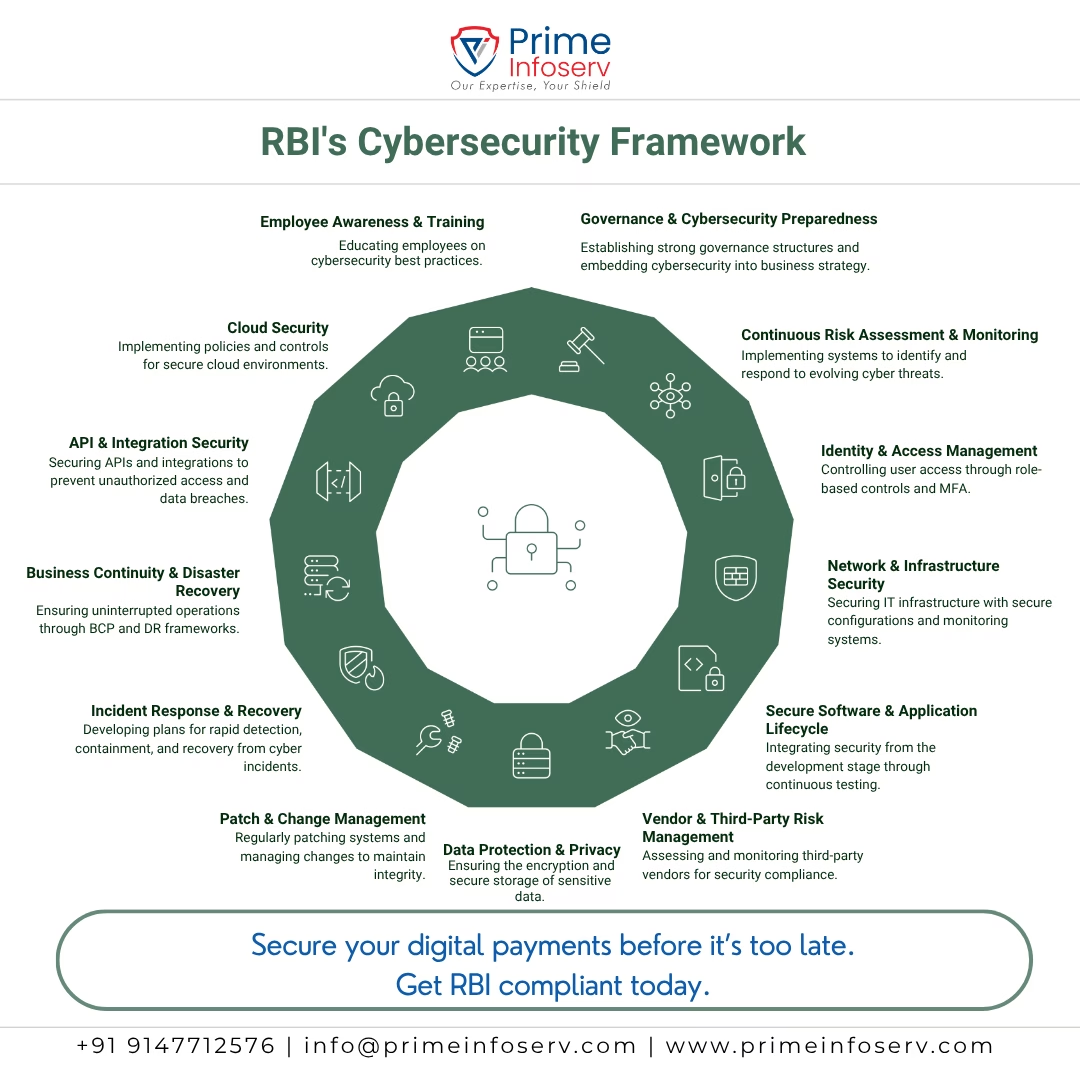
Core Pillars of RBI’s Cybersecurity Framework
1. Governance & Cybersecurity Preparedness
Organizations must establish strong governance structures that actively manage cybersecurity risks. This includes defining roles, responsibilities, and accountability at all levels. Cybersecurity should be embedded into business strategy—not treated as an afterthought.
2. Continuous Risk Assessment & Monitoring
Cyber threats evolve rapidly. The RBI mandates continuous monitoring systems to identify vulnerabilities, assess risks, and respond proactively. Regular security reviews help organizations stay ahead of emerging threats.
3. Identity & Access Management
Strict control over user access is essential. The guidelines emphasize:
- Role-based access controls
- Multi-factor authentication (MFA)
- Monitoring of privileged accounts
These measures help prevent unauthorized access and insider threats.
4. Network & Infrastructure Security
A secure IT infrastructure is the foundation of cyber resilience. Organizations are required to:
- Implement secure network configurations
- Deploy anti-malware and intrusion detection systems
- Establish Security Operations Centers (SOC) for real-time monitoring
5. Secure Software & Application Lifecycle
Security must be integrated from the development stage itself. This includes:
- Secure coding practices
- Regular Vulnerability Assessments and Penetration Testing (VAPT)
- Continuous security validation throughout the application lifecycle
6. Vendor & Third-Party Risk Management
Third-party vendors often introduce hidden vulnerabilities. RBI mandates:
- Thorough vendor risk assessments
- Security compliance checks
- Continuous monitoring of third-party systems
7. Data Protection & Privacy
Protecting sensitive financial and personal data is non-negotiable. Organizations must ensure:
- Data encryption
- Secure storage and transmission
- Strict data access controls
8. Patch & Change Management
Outdated systems are a major security risk. Regular patching and controlled change management processes are critical to closing security gaps and maintaining system integrity.
9. Incident Response & Recovery
No system is immune to attacks. What matters is how quickly and effectively an organization responds. The RBI requires:
- A well-defined incident response plan
- Rapid detection and containment mechanisms
- Post-incident analysis and reporting
10. Business Continuity & Disaster Recovery
Organizations must ensure uninterrupted operations even during disruptions. A strong Business Continuity Plan (BCP) and Disaster Recovery (DR) framework are essential to maintain service availability.
11. API & Integration Security
With increasing system integrations, APIs have become a critical attack surface. RBI emphasizes:
- Secure authentication and authorization
- Data integrity and confidentiality
- Continuous monitoring of API interactions
12. Cloud Security
As more payment systems move to the cloud, organizations must implement:
- Defined cloud security policies
- Periodic audits of cloud service providers
- Strong access and configuration controls
13. Employee Awareness & Training
Human error remains one of the biggest cybersecurity risks. Regular training programs ensure employees can identify threats like phishing, social engineering, and fraudulent activities.
Strengthening Digital Payment Security
Beyond organizational controls, the RBI has also outlined specific measures to secure digital transactions:
- Multi-factor authentication for payments
- Real-time fraud detection systems
- Secure configurations for payment infrastructure
- Customer awareness initiatives on safe digital practices
These measures aim to create a safer and more resilient digital payment environment for both businesses and consumers.
The Bigger Picture
The RBI’s master directions are not just regulatory requirements—they represent a shift toward proactive cybersecurity and long-term resilience. Organizations that align with these guidelines will not only achieve compliance but also gain a competitive advantage through improved trust, reliability, and operational stability.
Conclusion
As digital payments continue to grow, so do the risks associated with them. The Reserve Bank of India has set a clear roadmap for organizations to strengthen their cybersecurity frameworks and safeguard the financial ecosystem.
For businesses operating in the digital payment space, the message is clear:
Cyber resilience is no longer optional—it is essential.
Ensure your organization is aligned with RBI guidelines and future-ready. Achieve RBI compliance faster with expert-led cybersecurity and risk management solutions from Prime Infoserv. Call +91 9147712576 or mail: info@primeinfoserv.com