The “Dark Side of AI” is becoming increasingly visible as technology evolves. Artificial Intelligence is transforming industries, improving efficiency, and opening new possibilities. But like every powerful technology, it also has a darker side.
A recent case from Jaipur highlights how AI is being misused to exploit vulnerable job seekers. Fraudsters are now using advanced tools to create highly convincing fake documents, making scams more dangerous and harder to detect than ever before.
The Jaipur Airport Job Scam: What Happened?
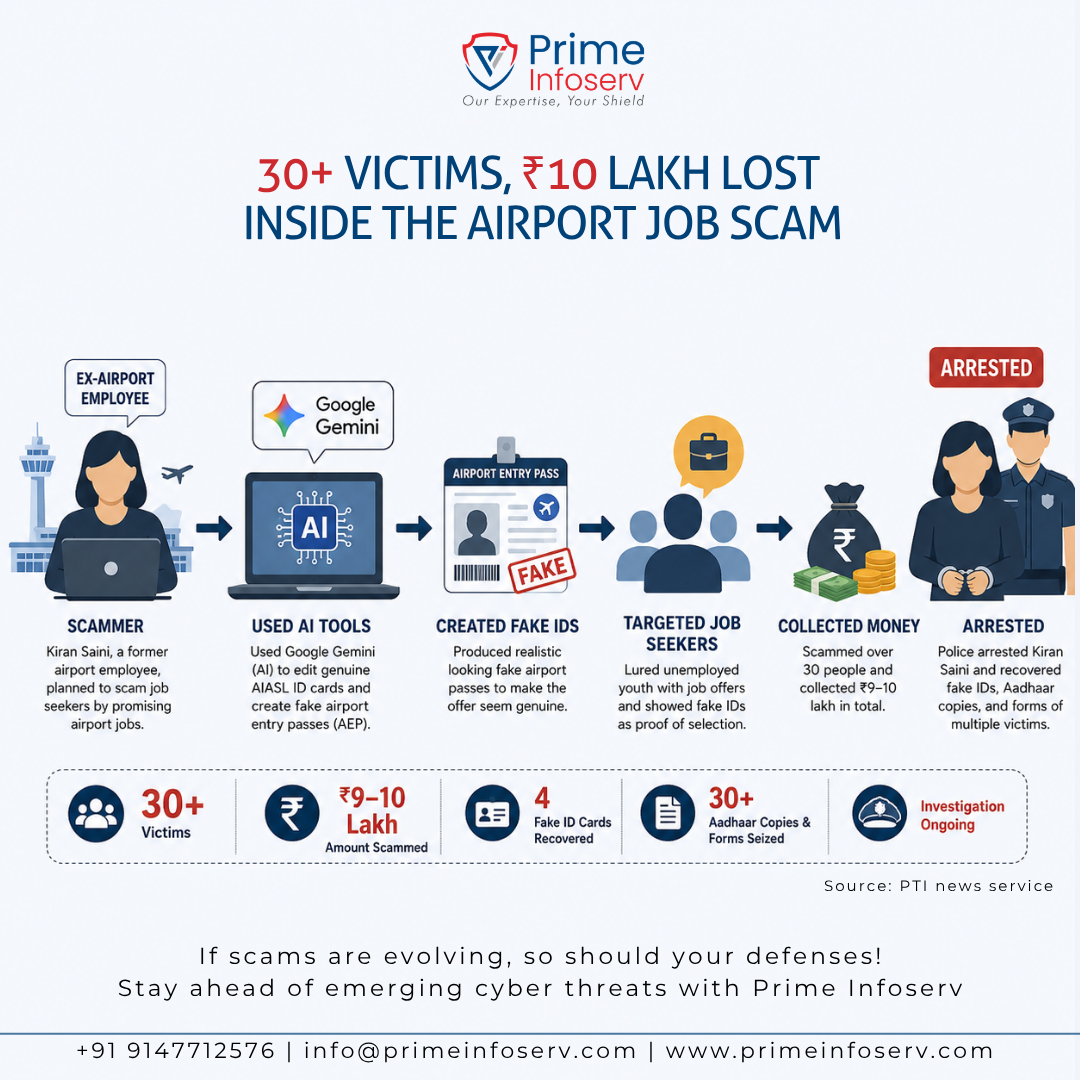
In a shocking cyber-enabled fraud case, a woman named Kiran Saini was arrested for cheating unemployed youths by promising jobs at the airport.
Leveraging her prior experience and understanding of airport processes, she:
- Targeted job seekers
- Promised confirmed placements
- Collected nearly ₹9–10 lakh
- Scammed around 30 individuals
What made this case particularly alarming was the use of AI-generated fake documents to build trust.
How AI Made the Scam More Convincing
AI-Edited Fake Identity Cards
The accused reportedly used tools like Google Gemini to:
- Modify genuine-looking airport documents
- Create fake Airport Entry Passes (AEPs)
- Produce IDs that appeared official and verified
These documents were so realistic that victims believed:
- Their hiring process was complete
- Their job was secured
- Their joining was just delayed
The Psychology Behind the Fraud
This wasn’t just a tech-driven scam—it was social engineering at its finest.
The fraudster:
- Claimed strong connections in airport authorities
- Told victims they had cleared interviews and medical tests
- Asked for payments in phases (training, uniforms, security clearance)
- Even called candidates near airport premises to make it look real
This combination of trust + urgency + proof (fake IDs) made the scam extremely effective.
Why Victims Fell for It
The scam worked because it exploited:
- Desperation for jobs
- Trust in official-looking documents
- Lack of awareness about verification processes
In today’s digital world, when a document looks real, most people assume it is real.
That assumption is now dangerous.
How the Scam Was Exposed
The fraud came to light when:
- Victims didn’t receive joining letters even after months
- Some individuals independently verified their documents
- Authorities were alerted and began investigation
Police later recovered:
- Fake airport ID cards
- Aadhaar copies
- Application forms and digital evidence
Read more about this incidence.
The Bigger Problem: AI-Powered Cyber Fraud
According to cybercrime expert Triveni Singh, criminals are increasingly combining:
- AI tools for document forgery
- Social engineering tactics to manipulate victims
This trend signals a major shift:
Scams are no longer easy to detect—they are designed to look legitimate.
Warning Signs You Should Never Ignore
If you’re a job seeker, watch out for these red flags:
- ❌ Requests for money for job confirmation
- ❌ Communication only via WhatsApp or personal numbers
- ❌ No official email domain or website verification
- ❌ “Guaranteed job” promises
- ❌ Documents that cannot be verified through official channels
How to Protect Yourself
- ✅ Always verify job offers through official company websites
- ✅ Cross-check recruiter details on LinkedIn or company directories
- ✅ Never pay recruitment fees
- ✅ Report suspicious offers to cybercrime authorities
- ✅ Take time to verify—urgency is a common scam tactic
What This Means for Businesses
This case is not just about job seekers—it’s a wake-up call for organizations.
Companies must:
- Strengthen identity verification systems
- Educate people about fraud risks
- Implement secure digital documentation practices
- Monitor misuse of their brand and credentials
Conclusion
Artificial Intelligence itself is not the enemy. The real risk lies in how easily it can be misused when combined with human vulnerabilities. As scams evolve, awareness and cybersecurity preparedness must evolve faster.
At Prime Infoserv, we help organizations stay ahead of emerging threats through:
- Cybersecurity solutions
- Compliance frameworks
- Risk management strategies
If your organization wants to build stronger defenses in an AI-driven threat landscape, now is the time to act.
Looking to secure your organization against modern cyber threats?
Connect with Prime Infoserv — your trusted partner in cybersecurity, compliance, and digital risk management.