
The rapid growth of social media has made platforms like Facebook and Instagram central to communication, business, and information sharing. However, this widespread reach has also turned them into powerful tools for cybercriminals.
Recent reports have raised serious concerns about scam advertisements targeting elderly users—highlighting how even trusted platforms can be exploited. This issue sheds light on a growing challenge: protecting vulnerable users in an increasingly AI-driven threat landscape.
What Happened?
According to reports, Meta Platforms is facing scrutiny over allegations that:
- Scam advertisers repeatedly targeted users through paid ads
- High-risk accounts continued operating despite being flagged
- Fraudulent campaigns focused heavily on senior citizens
These developments have sparked debates around platform accountability, ad moderation, and user safety.
How the Scam Ads Work
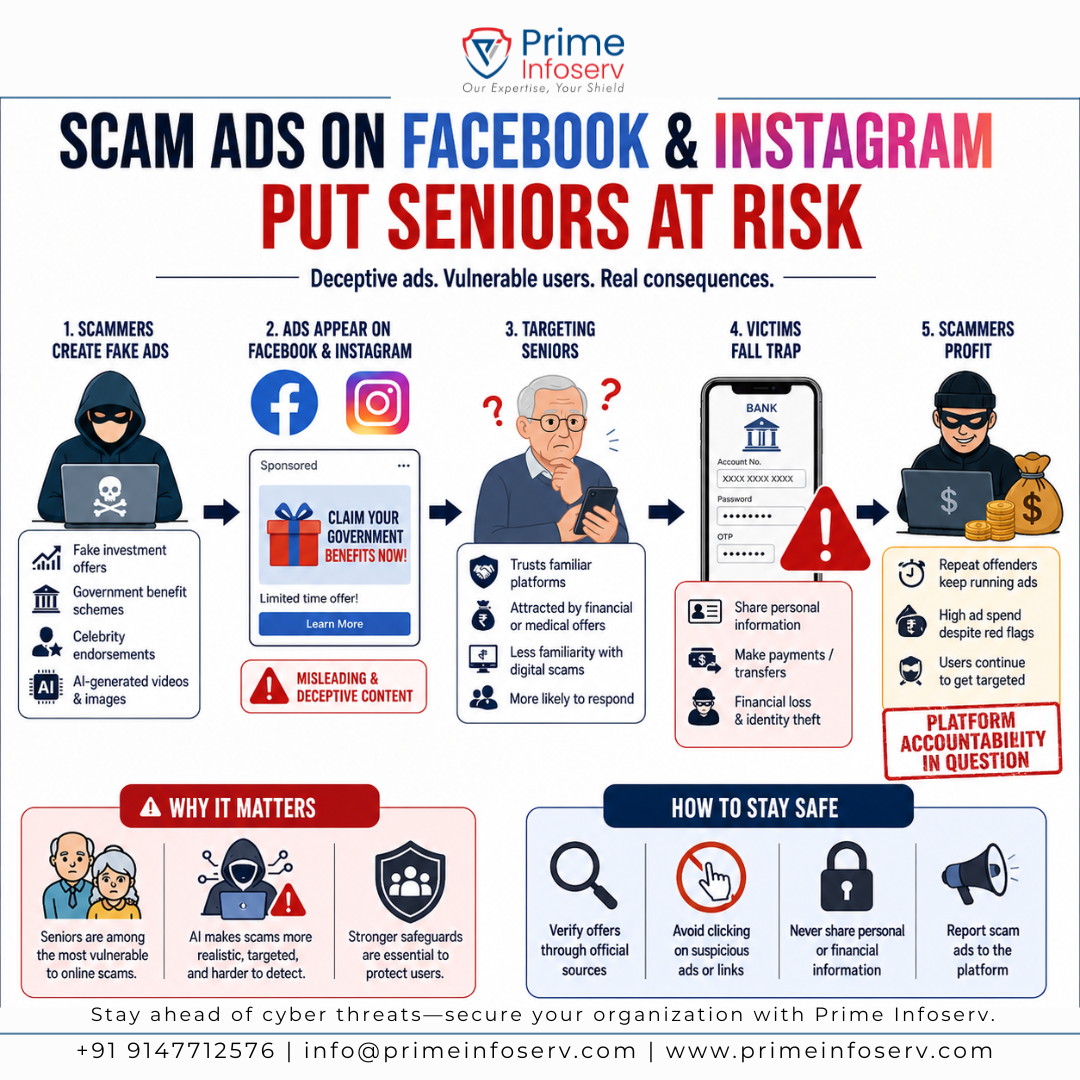
Cybercriminals are no longer relying on poorly written messages or obvious fraud tactics. Instead, they are using highly sophisticated and believable methods, including:
- Fake investment opportunities promising high returns
- Fraudulent government benefit schemes
- Impersonation of celebrities or trusted figures
- AI-generated videos and realistic visuals
These ads are designed to look legitimate, making it difficult—especially for older users—to distinguish between real and fake.
Why Seniors Are the Primary Target
Elderly users are often more vulnerable to such scams due to several factors:
- Higher trust in authority figures and official-looking messages
- Limited familiarity with evolving digital fraud tactics
- Increased likelihood of responding to financial or medical offers
- Less awareness of verification processes
Scammers exploit these gaps using social engineering techniques, blending psychology with technology to manipulate decisions.
The Role of AI in Modern Scams
Artificial Intelligence has significantly amplified the scale and effectiveness of online fraud.
Scammers are now using AI to:
- Create realistic videos and voice clones
- Generate convincing ad creatives
- Personalize scam messages at scale
This makes fraudulent ads more targeted, believable, and harder to detect—even for experienced users.
Meta’s Response
Meta Platforms has denied the allegations, stating that:
- Millions of scam ads and accounts have been removed
- Advertiser verification systems have been strengthened
- AI-based tools are being used to detect fraudulent activity
Despite these measures, the situation highlights the ongoing battle between platform security and evolving scam tactics.
The Bigger Concern: Platform Accountability
This issue raises an important question:
How responsible are platforms for the scams that occur through their advertising systems?
As digital ecosystems grow, there is increasing pressure on tech companies to:
- Strengthen ad review processes
- Permanently block repeat offenders
- Improve transparency in advertiser verification
- Protect vulnerable user groups
Governments and regulatory bodies are also beginning to push for stricter enforcement.
How to Stay Safe from Scam Ads
Whether you’re a user or a business, here are key precautions:
🚫 Red Flags to Watch For
- “Guaranteed returns” or urgent financial offers
- Ads asking for personal or banking details
- Celebrity endorsements that seem unusual
- Links leading to unknown or unsecured websites
✅ Best Practices
- Verify offers through official websites
- Avoid clicking on suspicious ads
- Educate family members, especially seniors
- Report fraudulent ads immediately
What This Means for Organizations
This isn’t just a consumer issue—it’s a business risk.
Organizations must:
- Train employees and users on scam awareness
- Monitor brand misuse in fake advertisements
- Implement strong cybersecurity and fraud detection systems
Conclusion
The rise of scam ads on social media platforms highlights a critical reality: cyber threats are no longer confined to emails or shady websites—they are embedded in everyday digital experiences.
As scams become more advanced and targeted, awareness, vigilance, and proactive cybersecurity measures are essential.
Don’t wait for scams to impact your organization—secure your business with Prime Infoserv. Call us : +91 9147712576 or mail: info@primeinfoserv.com