
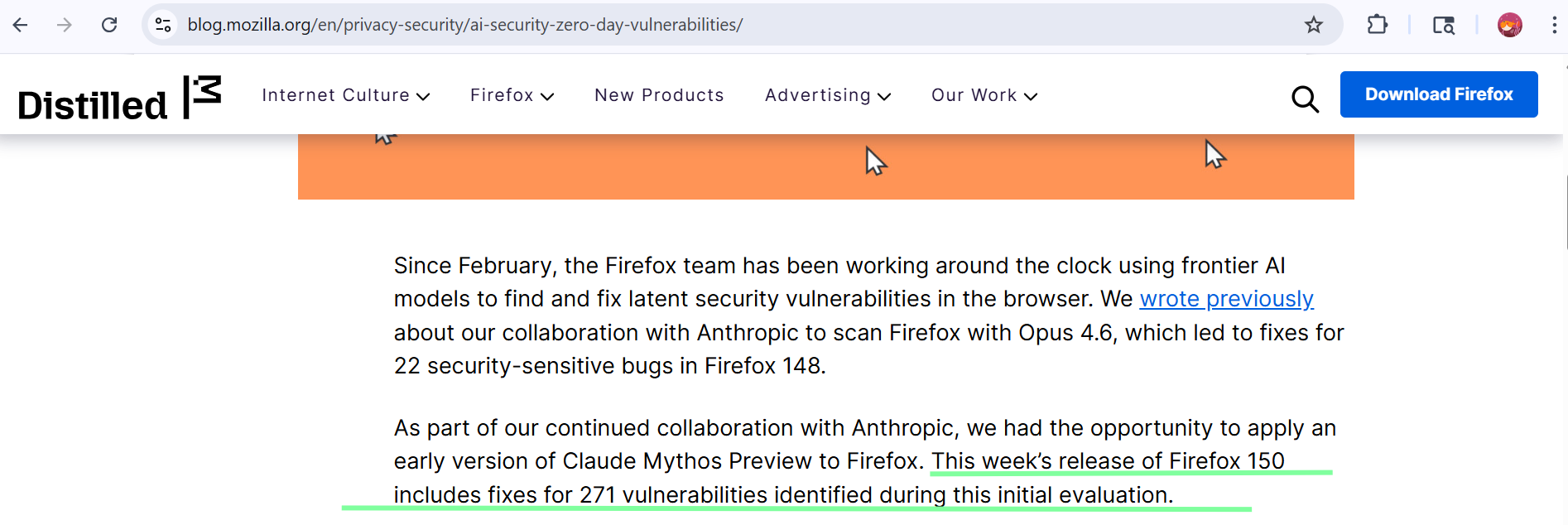
Mozilla has released Firefox 150 with a major security update, fixing 271 vulnerabilities discovered using AI-assisted analysis powered by Anthropic’s Claude models.
This Firefox 150 fixes 271 vulnerabilities using Claude AI milestone was shared in a Mozilla engineering blog authored by Bobby Holley, where the Firefox team explained how they collaborated with Anthropic to use frontier AI models to scan Firefox’s codebase for hidden security flaws.
Earlier in this initiative, AI-based analysis helped identify 22 security-sensitive bugs in Firefox 148, and the latest expanded evaluation led to hundreds of additional fixes in Firefox 150.
Every app we use, every browser we trust, and every system we depend on can contain hidden flaws. Some of these flaws are known. Many are not. And the most dangerous ones? They are the ones nobody has discovered yet—commonly called zero-day vulnerabilities.
What makes a zero-day so dangerous?
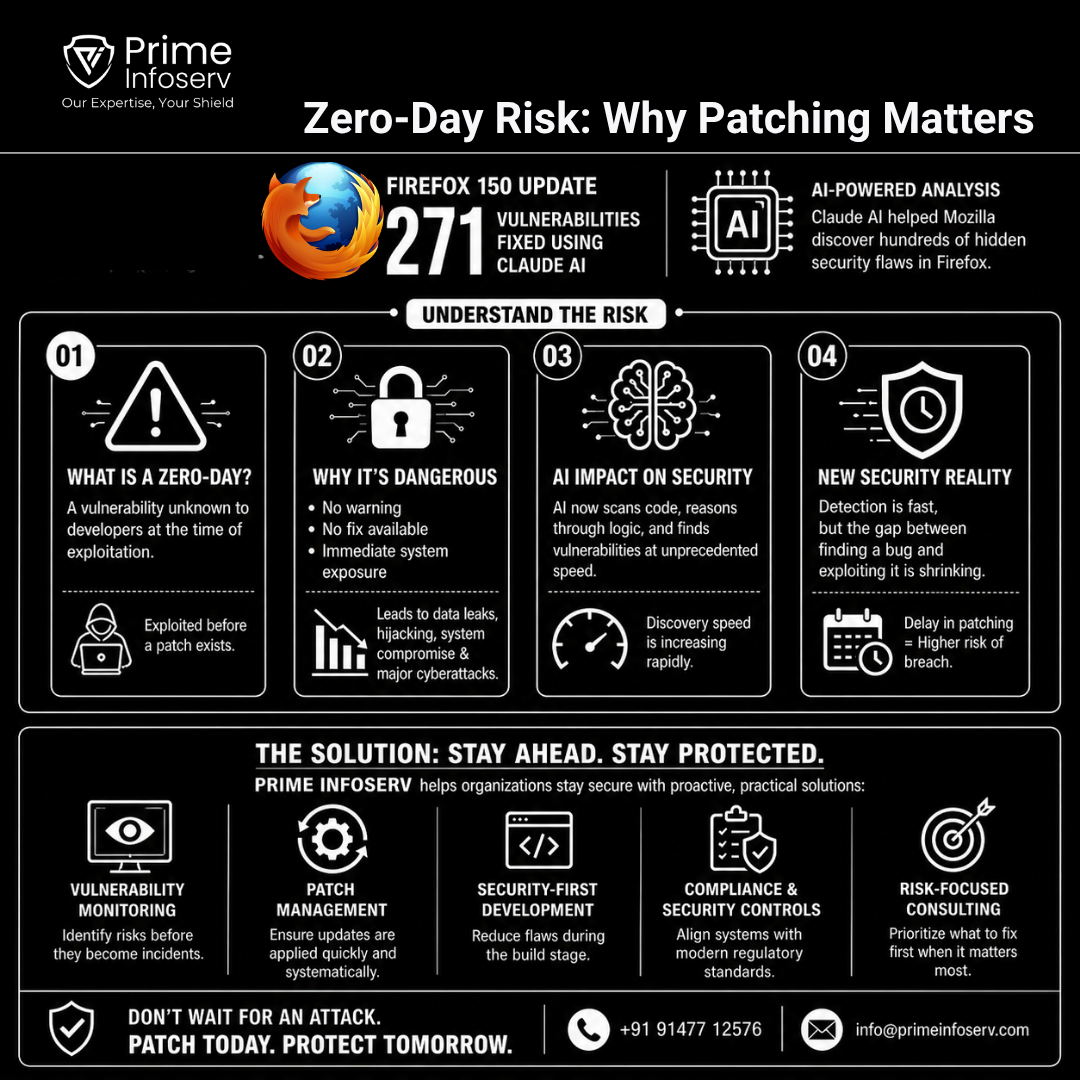
A zero-day vulnerability is a security flaw that is unknown to the software vendor at the time it is being exploited.
That means:
- No patch exists yet
- No warning has been issued
- Users are completely exposed
For attackers, this is the “perfect window.” For users, it is the most vulnerable state a system can be in.
Even a single overlooked vulnerability can lead to:
- Data leaks
- Account hijacking
- System compromise
- Large-scale cyberattacks
This is why on time patching is important.
The hidden truth: finding bugs is no longer the hardest part
Traditionally, security was a balance:
- Humans found bugs slowly
- Attackers needed time and expertise
- Defenders had time to respond
But this balance is shifting as modern AI systems can now scan code, reason through logic, and detect vulnerabilities at a speed no human team can match. A strong real-world example comes from Mozilla’s recent security work.
Mozilla’s engineering team, led by Bobby Holley, shared that they worked with frontier AI models (including Anthropic’s systems) to scan Firefox code. The results were striking:
- Dozens of security-sensitive issues were discovered in earlier testing phases
- Later evaluations identified hundreds of vulnerabilities (271 reported in Firefox 150 release context)
- Many of these were previously hidden even from traditional review and testing methods
This doesn’t mean humans failed. It means the scale of discovery has changed completely.
Why patching becomes even more critical in the AI era
When vulnerability discovery becomes faster, one thing changes immediately: The gap between “finding a bug” and “exploiting it” becomes dangerously small.
Attackers no longer need months of research. If AI can find weaknesses quickly, malicious actors can potentially weaponize them faster too.
That is why patching is now:
- Not just reactive maintenance
- But a continuous defense mechanism
Every delay in updating software increases exposure risk.
Why testing alone is not enough
Even modern, well-engineered systems like Firefox use:
- sandboxing
- memory-safe languages like Rust
- layered defense models
- fuzz testing
Yet none of these guarantees perfection.
Why? Because software complexity is still larger than any single defensive layer. Attackers only need one weak link, while defenders must secure all of them.
This asymmetry is exactly why zero-days are so powerful. That is why the only sustainable defense model is:
Detect early → Patch immediately → Reduce exposure window
Why this matters to everyday users
It affects:
- your browser
- your banking apps
- your email accounts
- your cloud storage
- even your devices
If software is not patched regularly, users carry the risk—often without knowing it.
How Prime Infoserv helps organizations stay ahead
This is where structured security and timely response become critical.
Prime Infoserv helps organizations reduce cybersecurity risk by focusing on practical, real-world security readiness, including:
- Vulnerability awareness & monitoring – identifying weak points before they become incidents
- Patch management support – ensuring updates are applied quickly and systematically
- Security-first development practices – reducing flaws during the build stage itself
- Compliance-driven security controls – aligning systems with modern regulatory expectations
- Risk-focused consulting – helping teams prioritize what to fix first when everything feels urgent
In a world where vulnerabilities can be discovered at AI speed, structured response is what keeps systems stable.
Not sure how secure your systems are?
With AI now accelerating vulnerability discovery, security risks can surface faster than most teams can respond. If you’re unsure whether your applications, infrastructure, or software updates are properly protected, it’s time to take a structured approach to security and patch management.
Prime Infoserv can help you assess risks, strengthen your security posture, and build a proactive vulnerability management strategy before issues turn into breaches.
📞 Call: +91 91477 12576
📧 Email: info@primeinfoserv.com