
The rapid rise of artificial intelligence has transformed how content is created, distributed, and consumed, leading to the introduction of AI-generated content rules in India to ensure transparency and protect businesses and individuals. From automated articles to deepfake videos, such content is now widespread. In response to growing concerns around misinformation, accountability, and user safety, the Ministry of Electronics and Information Technology (MeitY) has proposed stricter regulations to govern its use.
This move signals a significant shift in how digital platforms, businesses, and creators will need to approach AI usage going forward.
Why Is MeitY Introducing Stricter Rules for AI-Generated Content ?
AI-generated content brings both opportunity and risk. While it boosts efficiency and creativity, it also opens doors to:
1.Deepfakes and Manipulated Media
In India, a widely discussed case involved deepfake videos of Rashmika Mandanna that went viral on social media. The video showed her face morphed onto another person’s body, raising serious concerns about misuse of AI for impersonation and privacy violations.
2. Misinformation at Scale
During election cycles and major events, AI-generated images and messages have been circulated rapidly across platforms like WhatsApp and Facebook, spreading misleading narratives. The speed and volume of such content make it difficult to control once it goes viral.
3.Lack of Accountability for Harmful Content
There have been multiple instances where morphed images or AI-generated posts targeting public figures circulated without any clear source. The absence of proper labeling or traceability makes it difficult to hold creators or distributors accountable.
4.Difficulty in Identifying What Is Real vs. AI-Generated
AI-generated profile images and fake identities have been used in scams and impersonation attempts in India. Many users find it difficult to distinguish between real and synthetic content, especially when no disclosure is provided.
MeitY’s proposed regulations aim to create a safer digital ecosystem by ensuring transparency, traceability, and responsibility.
Key Highlights of the Proposed Rules
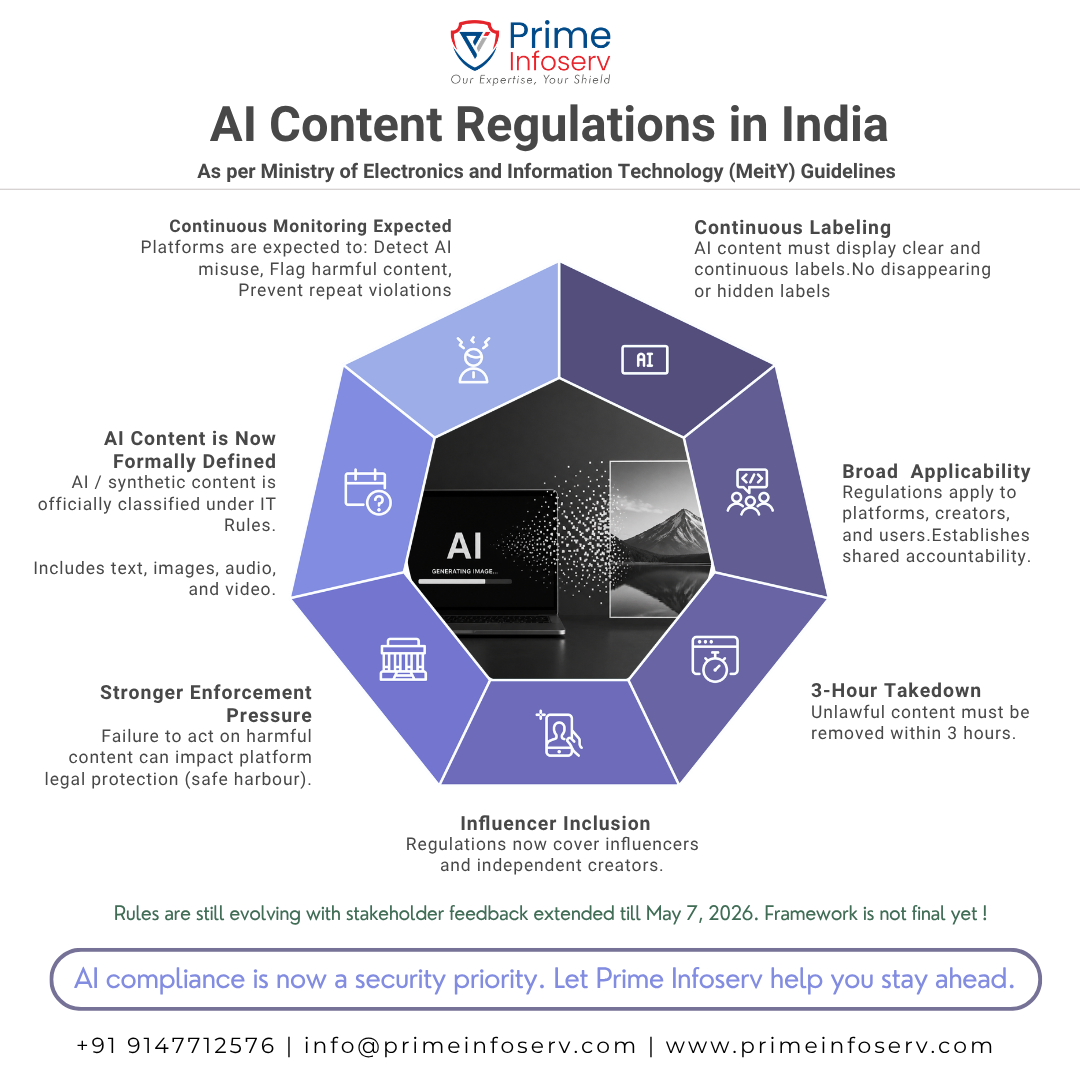
1. Mandatory & Continuous Labeling of AI-Generated Content
A key update in the draft amendment is the shift from requiring “prominent visibility” of AI labels to “continuous and clearly visible display throughout the entire duration” of the content.
This ensures that users are consistently aware when they are viewing AI-generated or synthetic content, rather than relying on a one-time or easily missed disclosure.
2. Accountability for Platforms
Intermediaries (social media platforms and content-sharing services) may be held responsible for hosting harmful AI-generated content if they fail to take timely action.
Additionally, earlier measures require platforms to remove unlawful content within three hours, reinforcing faster response expectations.
3. Broader Applicability Across Users
The proposed rules extend beyond platforms and may apply to:
- Content creators
- Influencers
- Independent publishers
- General users of AI tools
This significantly widens the scope of accountability in the digital ecosystem.
4. Risk Assessment for AI Tools
Organizations deploying AI systems may need to conduct risk assessments, especially for tools capable of generating synthetic media or influencing public perception.
5. User Awareness & Consent
There could be stricter requirements around informing users when they are interacting with AI systems such as chatbots or automated interfaces.
6. Alignment with Data Protection Frameworks
The proposed changes align with broader regulatory efforts, including the Digital Personal Data Protection Act, emphasizing responsible data usage and digital governance.
Additional Developments in the Draft Amendment
- The government has extended the deadline for stakeholder feedback to May 7, 2026, allowing more time for public consultation.
- Feedback submissions will be treated confidentially to encourage open participation.
- The amendments also propose bringing news and current affairs content shared by non-publisher users under a similar regulatory framework as registered publishers.
- Intermediaries may be required to comply with official advisories, SOPs, and guidelines issued by the government.
Industry Response & Concerns
The proposed changes have sparked discussion among digital rights groups. For instance, the Internet Freedom Foundation has raised concerns around:
- “Consultation fatigue” due to multiple revisions during the feedback process
- The operational burden of continuous compliance requirements
- Potential overreach in expanding regulatory scope
Such feedback highlights the need to balance effective governance with practical implementation.
Impact of AI-Generated Content Rules in India on Businesses and Creators
Organizations and individuals using AI tools will need to:
- Ensure proper and continuous labeling of AI-generated content
- Review content workflows and publishing practices
- Stay updated with evolving compliance requirements
- Align internal processes with regulatory expectations
For creators and marketers, transparency will become a key factor in maintaining credibility and trust.
Final Thought
India is taking a proactive approach to regulating AI-generated content. As these rules evolve, they are likely to shape how digital content is created, shared, and governed across industries.
The focus is clear: greater transparency, stronger accountability, and responsible use of AI technologies.
AI is redefining the digital landscape, and regulations are evolving to keep pace. MeitY’s proposed amendments signal a move toward a more transparent and accountable ecosystem—one where users are better informed and content is more clearly defined.
As these changes take shape, businesses and creators alike must adapt to ensure compliance while continuing to innovate responsibly.
AI rules are evolving, but most organizations don’t know where they stand. Prime Infoserv can help you benchmark your readiness and take the next step with clarity. Call + 91 9147712576 or mail: info@primeinfoserv.com
Found this article interesting, read AI & Deepfake Law in India under IT Amendment Rules 2026 by us !