

As India’s digital ecosystem continues to expand, organizations are handling more personal data than ever before. This rapid growth has made data protection a critical business responsibility rather than just a technical concern. The Digital Personal Data Protection Act, 2023 (DPDP Act) addresses this shift by establishing a clear legal framework for how personal data must be collected, processed, and safeguarded.
For businesses, the Act represents a significant transition toward structured data governance, transparency, and accountability. It is not merely about avoiding penalties—it is about building trust in an increasingly privacy-conscious environment.
Understanding the DPDP Act, 2023
The DPDP Act governs the processing of digital personal data in India. It applies to organizations operating within the country as well as global entities that process the data of individuals located in India. This extraterritorial scope ensures that Indian users remain protected regardless of where their data is handled.
At its core, the law seeks to balance two priorities: protecting individual privacy and enabling legitimate data use for business and governance. Organizations, referred to as Data Fiduciaries, are required to handle data responsibly, while individuals—known as Data Principals—are granted clear rights over their personal information.
Core Principles Driving the Law
The foundation of the DPDP Act lies in globally accepted data protection principles. Businesses are expected to process data in a lawful, fair, and transparent manner. Data must be collected for specific purposes, used only as necessary, and retained for a limited duration.
Accuracy and security are equally critical, requiring organizations to ensure that data remains correct and protected against unauthorized access. Most importantly, the principle of accountability ensures that businesses are responsible for how they manage personal data at every stage.
These principles are not theoretical—they directly shape how compliance frameworks must be designed and implemented.
Key Compliance Requirements for Businesses to be DPDP Compliant
While the Act is principle-driven, it translates into specific operational responsibilities. Organizations must ensure that their data practices are aligned with regulatory expectations and embedded into everyday processes.
At a practical level, businesses should focus on:
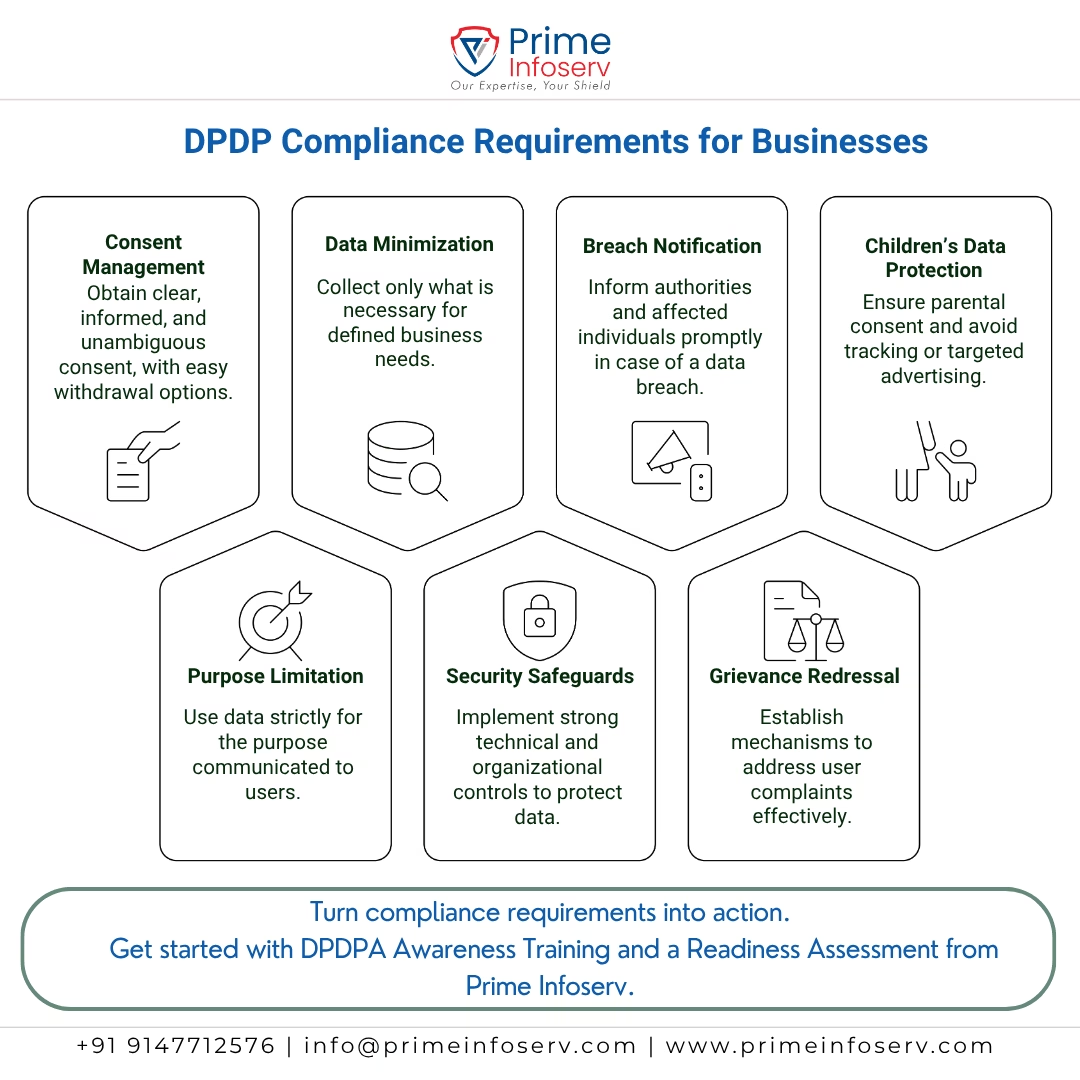
- Consent Management: Obtain clear, informed, and unambiguous consent, with easy withdrawal options
- Purpose Limitation: Use data strictly for the purpose communicated to users
- Data Minimization: Collect only what is necessary for defined business needs
- Security Safeguards: Implement strong technical and organizational controls to protect data
- Breach Notification: Inform authorities and affected individuals promptly in case of a data breach
- Grievance Redressal: Establish mechanisms to address user complaints effectively
- Children’s Data Protection: Ensure parental consent and avoid tracking or targeted advertising
These requirements form the backbone of DPDP compliance and must be integrated into business operations rather than treated as a one-time exercise.
Implementation Timeline and Phased Rollout
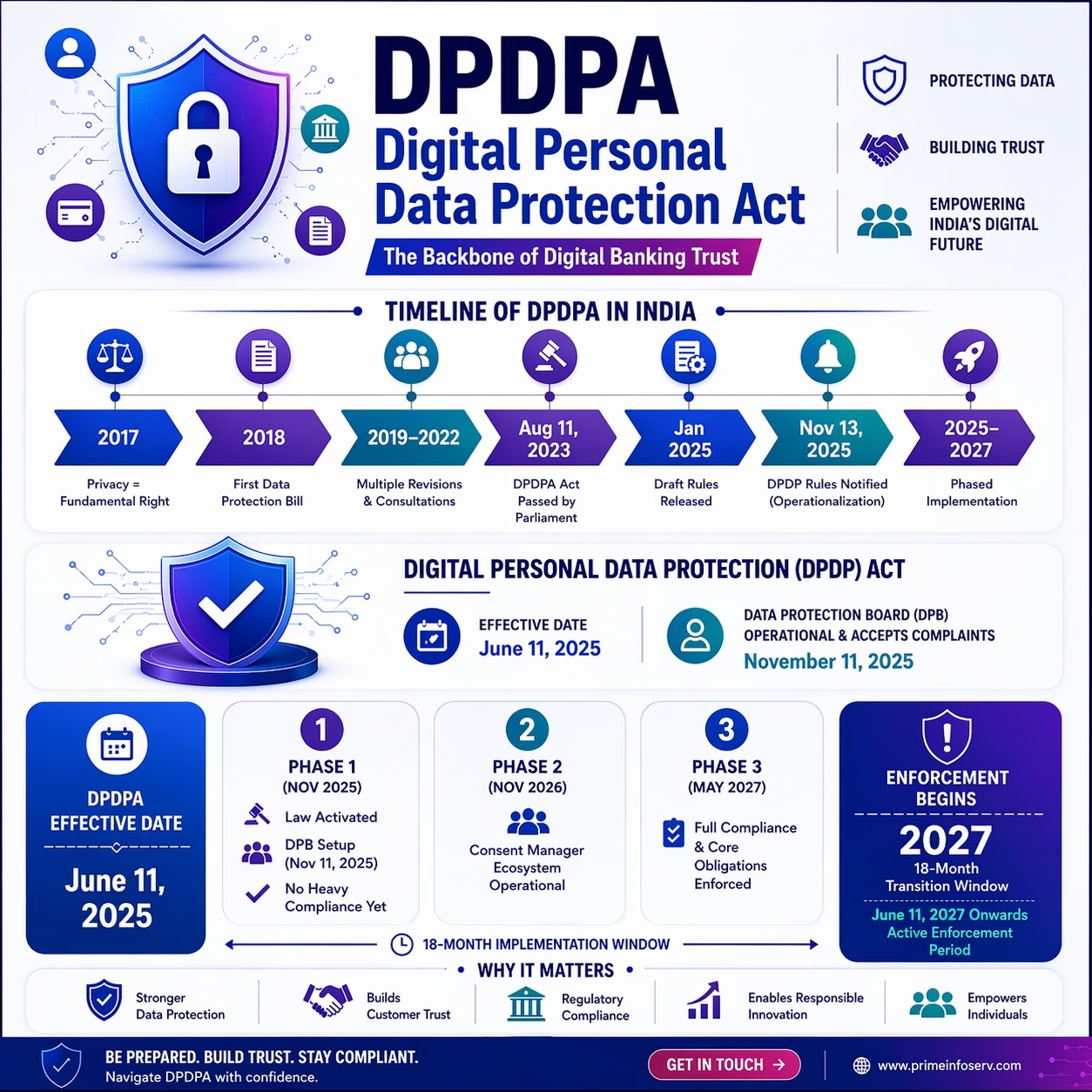
The DPDP Act is being introduced through a phased implementation approach, allowing organizations time to adapt. The journey began with the recognition of privacy as a fundamental right in 2017, followed by multiple legislative iterations leading to the Act’s passage in August 2023.
Current regulatory developments suggest that implementation will take place between 2025 and 2027. The initial phase is expected to activate the law and establish the Data Protection Board of India. This will be followed by a transition period where organizations align their internal systems, particularly around consent management and governance structures.
By 2027, full enforcement is anticipated, with stricter regulatory oversight and penalties for non-compliance. These timelines are based on evolving guidance and may be refined further through official notifications.
Why Businesses Must Act Now
Although the phased rollout provides some flexibility, delaying preparation can create significant challenges. Compliance requires more than policy updates—it involves transforming how data is managed across systems, teams, and processes.
Organizations that take early action can build their compliance frameworks gradually, reducing operational risk and avoiding last-minute disruptions. More importantly, they can strengthen customer trust by demonstrating a proactive commitment to data protection.
In contrast, businesses that delay may face rushed implementations, higher exposure to security risks, and potential financial penalties once enforcement becomes strict.
Steps Toward DPDP Compliance
The path to compliance begins with a clear understanding of how personal data flows within the organization. Businesses must identify what data they collect, where it is stored, and how it is processed across systems and third parties.
This is followed by implementing structured consent mechanisms that give users visibility and control over their data. Strengthening security measures is equally critical to prevent breaches and unauthorized access.
Organizations should also establish governance frameworks that define roles, responsibilities, and response strategies. Finally, employee awareness plays a vital role, as human error remains one of the most common causes of data breaches.
Final Thoughts
The DPDP Act, 2023 marks a significant step toward building a privacy-focused digital ecosystem in India. It introduces accountability, strengthens user rights, and sets clear expectations for businesses handling personal data.
Rather than viewing compliance as a burden, organizations should see it as an opportunity to enhance trust, improve security, and future-proof their operations. Those who act early will be better positioned to navigate regulatory changes and build long-term credibility in the market.
Get DPDP Ready with Prime Infoserv
Preparing for DPDP compliance requires the right mix of awareness, assessment, and execution.
Prime Infoserv supports your organization with:
DPDPA Awareness Training to educate your teams on data protection responsibilities, and
DPDPA Readiness Assessment to identify gaps and prepare your business for compliance.
Take the first step toward a secure and compliant future.
📞 +91 9147712576
📩 info@primeinfoserv.com
Start your DPDPA compliance journey today.