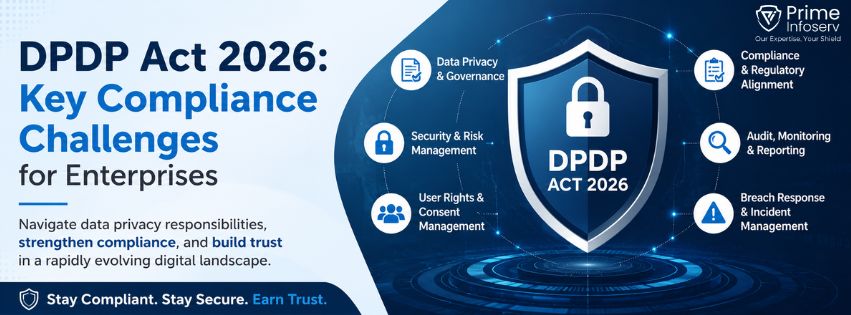
Data Privacy Is No Longer Optional — It’s a Business Responsibility
Data has become one of the most valuable assets for organizations today. From customer information and employee records to financial and operational data, businesses handle massive amounts of sensitive information every day.
But with rising cyber threats, growing digital ecosystems, and increasing regulatory scrutiny, governments worldwide are introducing stronger privacy laws to protect personal data.
Two major regulations currently shaping the global privacy landscape are:
- India’s Digital Personal Data Protection (DPDP) Act
- Europe’s General Data Protection Regulation (GDPR)
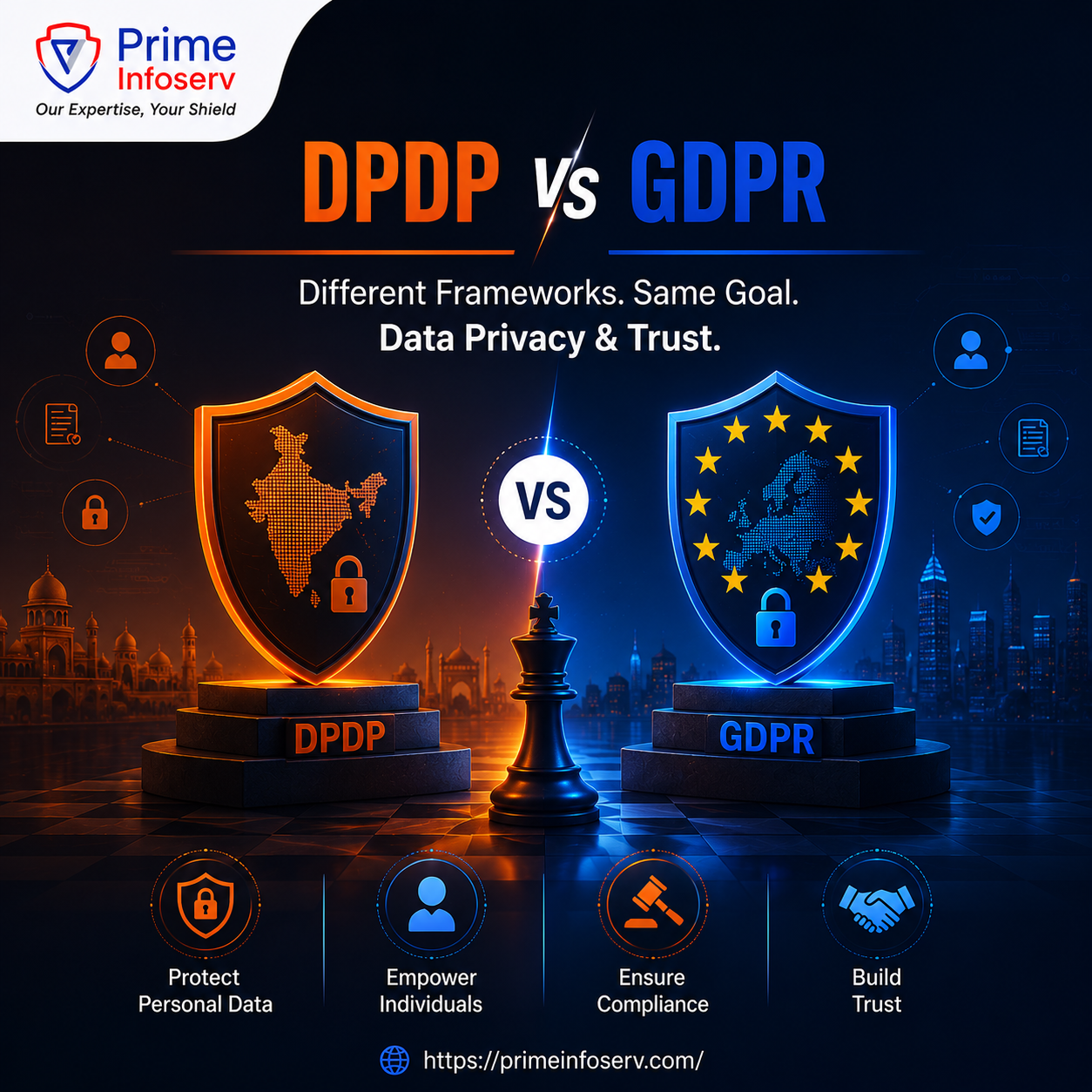
While both frameworks focus on protecting personal data, they differ in scope, implementation, governance, and compliance requirements.
For businesses operating digitally or managing customer information across regions, understanding these frameworks is critical for reducing compliance risks and strengthening data governance.
What Is GDPR?
The General Data Protection Regulation (GDPR) was introduced by the European Union in 2018 to establish strict rules around how organizations collect, process, store, and protect personal data.
GDPR applies to:
- Organizations operating within the EU
- Businesses processing data of EU citizens
- Global companies offering services to EU residents
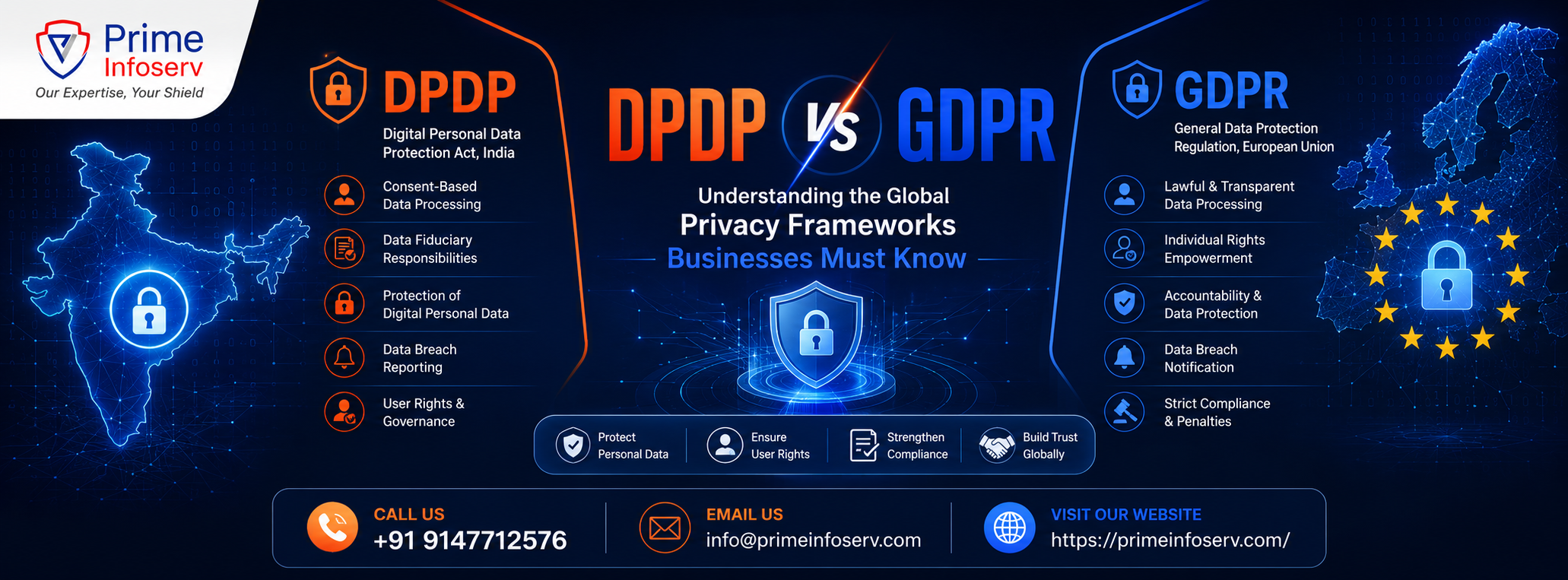
The regulation emphasizes:
- User consent
- Data transparency
- Privacy rights
- Accountability
- Security controls
GDPR quickly became one of the world’s most influential data protection laws and set the benchmark for global privacy regulations.
What Is India’s DPDP Act?
India’s Digital Personal Data Protection (DPDP) Act is designed to regulate how organizations process digital personal data while balancing individual privacy rights and business innovation.
The DPDP framework focuses on:
- Consent-based data processing
- Protection of digital personal data
- Data fiduciary responsibilities
- User rights
- Data breach reporting
- Governance and accountability
As India rapidly expands its digital economy, the DPDP Act is becoming a major compliance priority for businesses across sectors.
Organizations handling customer information, employee data, financial records, healthcare data, or digital transactions must now strengthen their privacy and governance practices.
DPDP vs GDPR: Key Differences Businesses Should Understand
1. Scope of Regulation
GDPR
GDPR covers both digital and non-digital personal data stored in structured formats.
DPDP
DPDP mainly focuses on digital personal data and digitized records.
2. Geographic Applicability
GDPR
Applies globally to any organization processing EU residents’ data.
DPDP
Primarily applies to organizations processing digital personal data within India.
3. Consent Requirements
GDPR
Requires clear, informed, and explicit consent from users before processing personal data.
DPDP
Also emphasizes consent-driven processing but includes additional flexibility for certain legitimate uses.
4. User Rights
Both GDPR and DPDP provide rights to individuals, including:
- Access to personal data
- Data correction
- Erasure requests
- Grievance mechanisms
However, GDPR currently offers broader and more detailed rights frameworks compared to DPDP.
5. Penalties & Compliance Risks
Non-compliance under both regulations can result in:
- Heavy financial penalties
- Reputational damage
- Regulatory investigations
- Customer trust issues
This is why businesses are increasingly investing in governance, risk, and compliance (GRC) strategies to strengthen data privacy readiness.
Why Businesses Must Pay Attention Now
Many organizations still believe privacy compliance is only a legal requirement. In reality, it directly impacts:
- Customer trust
- Brand reputation
- Operational continuity
- Cybersecurity resilience
- Business growth
As cyberattacks and data breaches continue to rise globally, regulators are placing greater accountability on organizations to secure sensitive information properly.
A weak privacy framework can expose businesses to:
- Data leaks
- Insider threats
- Unauthorized access
- Third-party risks
- Financial fraud
- Legal consequences
Common Privacy & Compliance Challenges Organizations Face
Lack of Data Visibility
Many organizations do not fully understand where sensitive data is stored or how it flows across systems.
Weak Access Controls
Improper access management increases the risk of internal misuse and external compromise.
Inadequate Security Governance
Without strong governance frameworks, businesses struggle to maintain compliance consistency.
Third-Party Vendor Risks
External vendors handling sensitive data may introduce significant privacy and cybersecurity risks.
Limited Employee Awareness
Human error remains one of the biggest causes of data exposure incidents.
How Businesses Can Strengthen Privacy Compliance
Organizations should move beyond reactive compliance approaches and build proactive privacy governance frameworks.
Key focus areas include:
Data Risk Assessments
Regular assessments help identify vulnerabilities and compliance gaps.
Security Governance Frameworks
Strong governance structures improve accountability and operational control.
Employee Awareness Programs
Training employees on privacy and cybersecurity best practices reduces human-related risks.
Continuous Compliance Monitoring
Ongoing monitoring helps organizations adapt to evolving regulatory requirements.
Incident Response Planning
Preparedness is essential for minimizing the impact of data breaches.
Why GRC & Cybersecurity Services Matter
Data privacy compliance is closely connected with cybersecurity resilience.
Organizations today require integrated solutions such as:
- Governance, Risk & Compliance (GRC)
- Vulnerability Assessment & Penetration Testing (VAPT)
- Risk Management Services
- Security Audits
- Compliance Consulting
- Security Awareness Training
- Incident Response Support
This is where Prime Infoserv helps organizations strengthen security governance and compliance readiness through expert-driven cybersecurity and GRC solutions.
By implementing proactive governance strategies, businesses can improve operational resilience while building customer trust.
The Future of Global Data Privacy
Privacy regulations will continue evolving as digital ecosystems expand.
Businesses operating internationally must prepare for:
- Stricter compliance expectations
- Greater accountability
- Increased cybersecurity risks
- Cross-border data governance challenges
Organizations that prioritize privacy, governance, and cybersecurity today will be far better prepared for future regulatory and operational challenges.
Final Thoughts
Both GDPR and DPDP are transforming how organizations manage personal data. While the frameworks differ in implementation and jurisdiction, their shared objective is clear: protecting individual privacy and strengthening accountability.
For businesses, privacy compliance is no longer just about avoiding penalties — it’s about building trust, securing operations, and improving long-term resilience.
Strengthen your organization’s privacy governance and cybersecurity posture with Prime Infoserv’s expert GRC, risk management, compliance, VAPT, and security consulting services.
Secure Your Business Before Risks Become Breaches
📞 Call Us: +91 9147712576
📧 Email: info@primeinfoserv.com
🌐 Website: https://primeinfoserv.com/
Book a 15-minute consultation to assess your readiness. Call: +91 9147712576 today !