Think twice before you click. A single visit to a fake website can expose your personal information, financial details, or even your organization’s sensitive data. As cybercriminals continue to create convincing phishing websites, recognizing the warning signs has become an essential digital skill for both individuals and businesses.
According to the PIB Fact Check, there are several common indicators that can help you identify fraudulent websites before it’s too late. In this blog, we’ll explore these warning signs and discuss how organizations can strengthen their defenses with the right cybersecurity and governance strategies.
Why Fake Websites Are a Growing Cybersecurity Threat
Fake websites are designed to imitate trusted brands, government portals, banking websites, and e-commerce platforms. Their primary goal is to trick users into:
- Sharing login credentials
- Revealing banking or payment information
- Downloading malware
- Providing personal or business data
While individuals are frequent targets, businesses face even greater risks when employees unknowingly interact with malicious websites, potentially leading to data breaches, ransomware attacks, and compliance violations.
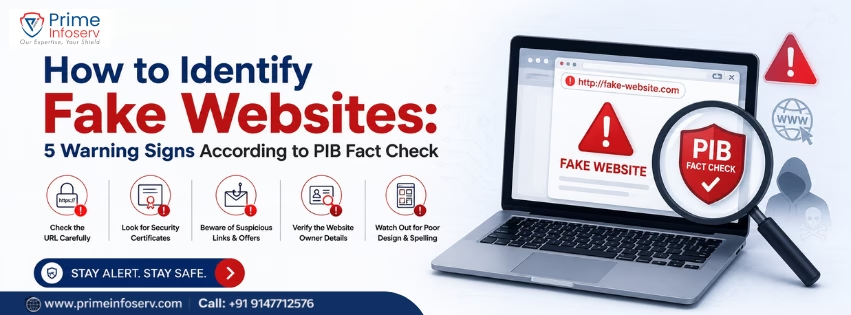
5 Warning Signs of a Fake Website
1. Suspicious or Misspelled Website URLs
Cybercriminals often register domains that closely resemble legitimate websites. Look carefully for:
- Extra letters or numbers
- Misspellings
- Unusual domain extensions
- Random characters
Always verify the URL before entering sensitive information.
2. Missing HTTPS or Security Certificate
Secure websites use HTTPS, which encrypts communication between your browser and the website.
Although HTTPS alone doesn’t guarantee legitimacy, the absence of it is a major warning sign—especially on websites requesting passwords or payment details.
3. Poor Website Design and Numerous Errors
Many fake websites contain:
- Grammar mistakes
- Low-quality images
- Broken links
- Inconsistent branding
- Unprofessional layouts
Legitimate organizations typically invest in maintaining polished and trustworthy websites.
4. Unrealistic Offers That Seem Too Good to Be True
Huge discounts, exclusive giveaways, or urgent “limited-time” offers are common tactics used to pressure users into acting quickly.
If an offer seems unusually generous, verify it through the company’s official website before proceeding.
5. Requests for Sensitive Information Without Verification
Be cautious if a website asks for:
- Banking details
- OTPs
- Credit card information
- Aadhaar or PAN details
- Login credentials
Legitimate organizations generally follow secure authentication processes and explain why specific information is being collected.
Why Businesses Should Take Fake Websites Seriously
For organizations, fake websites aren’t just an inconvenience—they can become the starting point for larger cyber incidents.
Employees who unknowingly interact with phishing websites may expose corporate credentials, enabling attackers to gain unauthorized access to business systems.
This is why cybersecurity should combine technology, governance, employee awareness, and continuous monitoring.
How Prime Infoserv Helps Organizations Stay Protected
At Prime Infoserv, we help organizations strengthen their cybersecurity posture through proactive security services and governance frameworks.
Managed Security Services
Our Managed Security Services help businesses detect and respond to cyber threats before they cause damage. With continuous monitoring, threat detection, incident response, and security expertise, organizations can reduce risk while maintaining business continuity.
Learn more about our Managed Security Services:
https://primeinfoserv.com/managed-security-services/
Governance, Risk & Compliance (GRC)
Cybersecurity is not only about preventing attacks—it’s also about managing risk and meeting regulatory requirements.
Our Governance, Risk & Compliance (GRC) solutions help organizations:
- Identify security risks
- Strengthen compliance programs
- Improve security governance
- Build long-term cyber resilience
Discover our GRC solutions:
https://primeinfoserv.com/grc/
Stay Informed with Trusted Sources
Want to learn more about the warning signs highlighted by PIB Fact Check?
You can read the detailed coverage published by Mint here:
Best Practices to Stay Safe Online
Whether you’re an individual or part of an organization, following these habits can significantly reduce your exposure to online scams:
- Verify website URLs before clicking.
- Bookmark frequently used websites.
- Enable Multi-Factor Authentication (MFA).
- Avoid downloading files from unknown sources.
- Keep browsers and security software updated.
- Train employees to recognize phishing attempts.
- Report suspicious websites immediately.
Final Thoughts
Fake websites are becoming increasingly sophisticated, making vigilance more important than ever. Recognizing the warning signs is the first step, but organizations also need comprehensive cybersecurity strategies to stay ahead of evolving threats.
With expert Managed Security Services and Governance, Risk & Compliance (GRC) solutions, Prime Infoserv helps businesses strengthen their defenses, reduce cyber risk, and build a more secure digital future.
Ready to Strengthen Your Cybersecurity?
Don’t wait until a phishing attack or fake website compromises your business.
Partner with Prime Infoserv to enhance your cybersecurity posture through proactive monitoring, risk management, and compliance-driven security solutions.
Contact us today 9147712576 to discover how our Managed Security Services and GRC solutions can help protect your organization from evolving cyber threats.