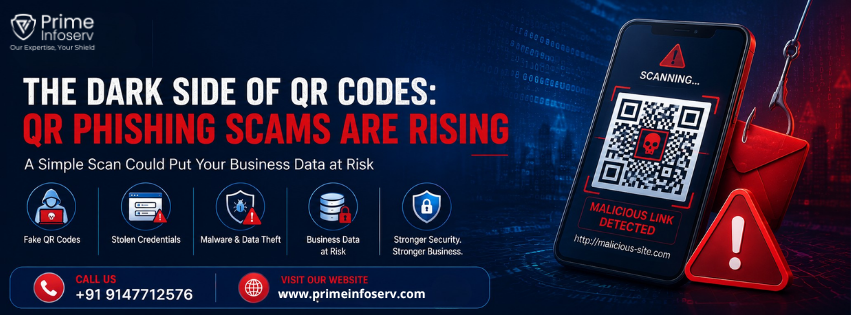
A Simple Scan Could Put Your Business Data at Risk
QR codes have become a part of everyday life. From restaurant menus and payment systems to login authentication and marketing campaigns, people scan QR codes without a second thought. But cybercriminals are now exploiting this convenience to launch a growing threat known as QR phishing scams or “quishing.”
What looks like a harmless QR code can secretly redirect users to malicious websites, steal login credentials, install malware, or compromise sensitive business information.
As organizations continue to embrace digital transformation, understanding the risks behind QR phishing scams is becoming more important than ever.
What Is QR Phishing?
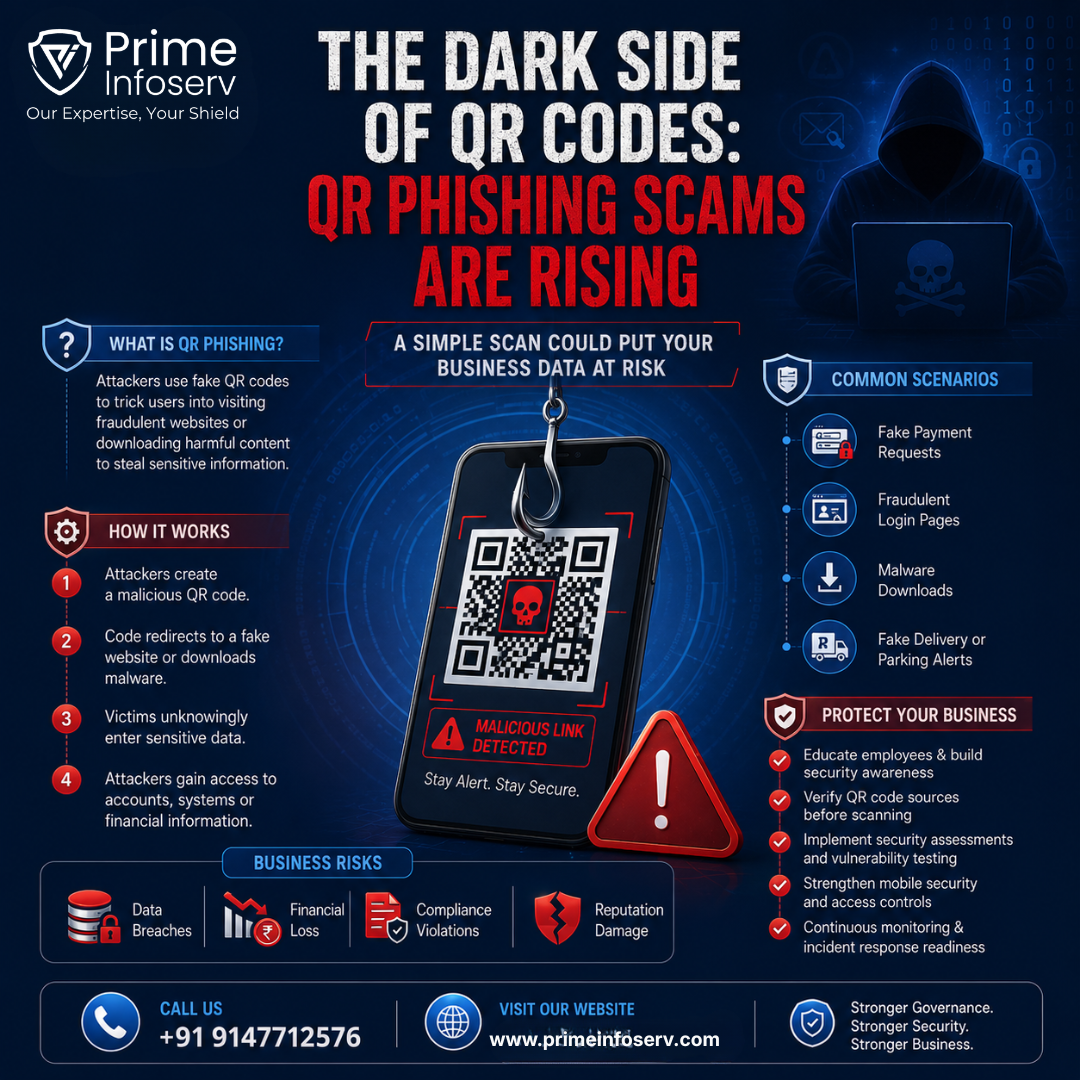
QR phishing is a cyberattack where attackers use fake or malicious QR codes to trick users into visiting fraudulent websites or downloading harmful content.
Unlike traditional phishing emails where suspicious links may be visible, QR codes hide the destination URL, making it harder for users to identify malicious activity before scanning.
Cybercriminals commonly use QR phishing to:
- Steal usernames and passwords
- Capture banking or payment information
- Distribute malware
- Gain unauthorized access to corporate systems
- Bypass email security filters
This attack method is rapidly growing because QR codes are trusted by most users and widely used across businesses.
Why QR Code Scams Are Increasing
The rise in mobile payments, digital onboarding, and contactless interactions has created new opportunities for attackers.
Several factors are contributing to the increase in QR phishing attacks:
1. Users Trust QR Codes
Most people assume QR codes are safe because they are commonly used in restaurants, offices, parking systems, and payment gateways.
2. Hidden URLs
A QR code conceals the actual destination link, making it difficult to verify whether the website is legitimate.
3. Increased Smartphone Usage
Since QR codes are mainly scanned through mobile devices, attackers target users who may not have advanced mobile security protections enabled.
4. Remote & Hybrid Work Environments
Employees working remotely may scan fake QR codes sent through emails, posters, or collaboration tools without proper verification.
How QR Phishing Attacks Work
A typical QR phishing attack may follow these steps:
- Attackers create a malicious QR code.
- The code redirects victims to a fake login page or malware download.
- Victims unknowingly enter sensitive credentials.
- Attackers gain access to email accounts, payment systems, or corporate networks.
In some cases, cybercriminals place fake QR stickers over legitimate payment or information codes in public places.
Common QR Phishing Scenarios
Fake Payment Requests
Attackers replace genuine payment QR codes with fraudulent ones to steal money directly from users.
Fraudulent Login Pages
Users are redirected to fake Microsoft 365, banking, or enterprise login portals designed to capture credentials.
Malware Downloads
Scanning malicious QR codes may initiate harmful downloads onto mobile devices.
Fake Delivery or Parking Notifications
Cybercriminals use fake QR codes on parking meters, courier notifications, or advertisements to trick users into making payments or sharing data.
Business Risks Associated with QR Phishing
QR phishing is not just an individual risk — it can severely impact organizations as well.
Data Breaches
Compromised employee credentials can expose sensitive business data.
Financial Loss
Fraudulent payment redirections can lead to direct financial damage.
Compliance Violations
Organizations handling customer data may face regulatory and compliance challenges if security controls are weak.
Reputation Damage
A successful phishing incident can reduce customer trust and affect brand credibility.
This is why organizations are increasingly strengthening their cybersecurity governance frameworks and adopting proactive security assessments.
How Organizations Can Protect Against QR Phishing
Employee Awareness Training
Educating employees about QR phishing risks is one of the most effective defense strategies.
Organizations should train teams to:
- Verify QR code sources
- Avoid scanning unknown codes
- Check redirected URLs carefully
- Report suspicious activity immediately
Implement Security Assessments
Regular security audits and vulnerability assessments help identify weaknesses before attackers exploit them.
Services such as:
- Vulnerability Assessment & Penetration Testing (VAPT)
- Risk Assessments
- Governance, Risk & Compliance (GRC)
- Security Awareness Programs
- Incident Response Planning
can significantly improve organizational cyber resilience.
Strengthen Mobile Security
Businesses should implement:
- Mobile device management (MDM)
- Endpoint protection
- Multi-factor authentication (MFA)
- Secure access controls
Monitor Threat Activity
Continuous monitoring through SOC (Security Operations Center) services can help detect suspicious activities early.
Why Governance & Compliance Matter
Cybersecurity is no longer just an IT responsibility — it is a governance priority.
Organizations must ensure they have:
- Proper data protection policies
- Security governance frameworks
- Compliance monitoring processes
- Risk management controls
- Incident response readiness
This is where companies like Prime Infoserv help organizations strengthen their security posture through comprehensive GRC and cybersecurity services tailored to evolving threats.
With growing digital risks, proactive governance and security assessments are becoming essential for business continuity.
The Future of QR Code Security
As QR code usage continues to expand across industries, cybercriminals will likely continue targeting this technology.
Businesses must move beyond reactive security approaches and invest in:
- Cybersecurity awareness
- Risk management strategies
- Security testing
- Compliance frameworks
- Continuous monitoring
The organizations that prioritize cyber resilience today will be far better prepared to handle emerging threats tomorrow.
Final Thoughts
QR codes may simplify digital interactions, but they also create new attack opportunities for cybercriminals. A single malicious scan can lead to credential theft, malware infections, financial fraud, or even large-scale data breaches.
Building cybersecurity awareness, strengthening governance practices, and implementing proactive security measures are critical steps every organization should take to reduce cyber risks.
Protect your business before cyber threats impact your operations. Strengthen your security posture with Prime Infoserv’s expert GRC, cybersecurity, VAPT, risk assessment, and compliance solutions.