Are organizations truly prepared to protect sensitive personal data in an era of growing cyber threats and strict privacy regulations?
Data privacy is no longer just a regulatory requirement — it has become a critical business priority for enterprises handling sensitive digital information. The increasing rise of cyberattacks, data breaches, and compliance obligations is pushing organizations to rethink how they collect, process, store, and secure personal data.
The Digital Personal Data Protection Act (DPDP Act) 2026 is reshaping how organizations manage personal data across digital platforms. As regulatory expectations increase, enterprises are now required to establish stronger privacy governance, cybersecurity controls, and data protection frameworks to remain compliant.
Businesses handling customer, employee, and third-party information must align with evolving privacy regulations while protecting sensitive data from cyber threats, misuse, and unauthorized access. This has significantly increased the demand for professional DPDP compliance services that help organizations strengthen security and achieve regulatory readiness.
Organizations that fail to address DPDP Act compliance requirements may face operational disruption, reputational damage, regulatory scrutiny, and financial penalties.
Understanding DPDP Compliance Requirements
The DPDP Act focuses on ensuring responsible handling of personal data while giving individuals greater control over how their information is processed and stored. Enterprises must implement structured security and governance practices to support ongoing DPDP compliance.
Key compliance requirements include:
- Secure collection and processing of personal data
- Transparent consent management
- Data retention and deletion controls
- Incident response and breach reporting
- Access management and data governance
A reliable DPDP compliance service helps organizations identify gaps, implement controls, and improve overall cybersecurity resilience.
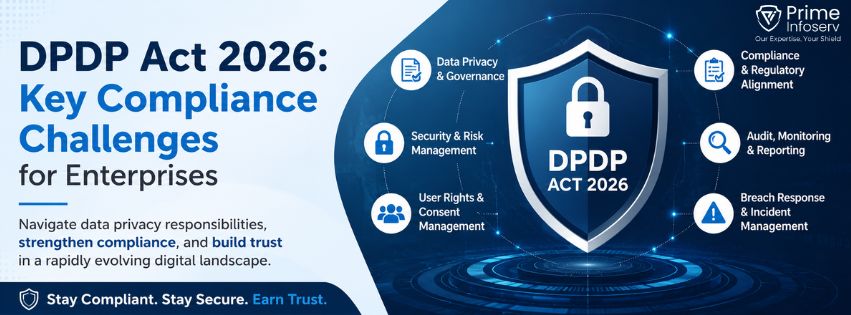
Challenge 1: Identifying & Classifying Sensitive Data
One of the biggest challenges enterprises face is identifying where sensitive personal data exists within their infrastructure. Data is often distributed across cloud platforms, applications, endpoints, databases, and third-party systems.
Organizations commonly struggle with:
- Lack of centralized data visibility
- Unstructured data environments
- Inconsistent data classification
- Duplicate or outdated records
A structured DPDP readiness assessment helps businesses gain visibility into their digital ecosystem and improve data governance practices.
Challenge 2: Managing Consent & User Rights
The Digital Personal Data Protection Act emphasizes user consent and individual privacy rights. Organizations must ensure users clearly understand how their personal information is collected, processed, and shared.
Enterprises must establish processes for:
- Consent collection and tracking
- Consent withdrawal management
- Data correction requests
- Data deletion requests
- Privacy notice management
Without proper automation and governance, managing consent across multiple systems can become highly complex.
Challenge 3: Strengthening Cybersecurity Infrastructure
Weak cybersecurity controls increase the risk of data breaches and compliance violations. Enterprises must secure sensitive information through layered security frameworks aligned with DPDP Act compliance requirements.
Critical security measures include:
- Multi-Factor Authentication (MFA)
- Role-Based Access Control (RBAC)
- Encryption for sensitive data
- Endpoint Detection & Response (EDR)
- Security monitoring and SIEM solutions
Professional DPDP compliance services India help businesses strengthen security posture while aligning with regulatory expectations.
Challenge 4: Third-Party & Vendor Risk Management
Many organizations share sensitive data with vendors, cloud providers, consultants, and external partners. However, third-party ecosystems can introduce significant privacy and cybersecurity risks.
Businesses must ensure that vendors maintain:
- Strong access controls
- Secure data handling practices
- Continuous monitoring mechanisms
- Compliance with privacy regulations
An experienced DPDP consultant India can help enterprises evaluate third-party risks and establish stronger vendor governance frameworks.
Challenge 5: Incident Response & Breach Reporting
The DPDP Act requires organizations to respond quickly to cybersecurity incidents involving personal data. Delayed responses can increase both operational and regulatory risks.
Enterprises should establish:
- Incident response frameworks
- Threat detection mechanisms
- Breach investigation procedures
- Recovery and remediation plans
- Compliance reporting workflows
A proactive DPDP compliance service supports businesses in improving breach response readiness and minimizing disruption during security incidents.
Challenge 6: Data Retention & Secure Disposal
Retaining unnecessary personal data increases compliance risks and expands the attack surface for cybercriminals. Organizations must establish structured data lifecycle management practices.
This includes:
- Data retention policies
- Secure deletion procedures
- Backup protection controls
- Automated archival management
A comprehensive DPDP audit services approach helps organizations evaluate whether data retention and disposal practices align with compliance requirements.
Challenge 7: Employee Awareness & Internal Governance
Employees play a major role in maintaining data privacy and cybersecurity. Human errors such as phishing attacks, weak passwords, or improper data handling can lead to major compliance failures.
Organizations should conduct:
- Cybersecurity awareness training
- Phishing simulation exercises
- Data handling workshops
- Privacy governance training
Building a strong internal security culture supports long-term DPDP compliance and operational resilience.
Challenge 8: Managing Compliance Across Cloud & Hybrid Environments
As enterprises adopt cloud technologies and remote work models, managing privacy and security across distributed environments becomes more complex.
Businesses must secure:
- Cloud applications and workloads
- Remote access infrastructure
- SaaS environments
- Mobile devices and endpoints
Modern DPDP compliance services help organizations improve cloud security visibility and maintain compliance across hybrid infrastructures.
Why Enterprises Need Professional DPDP Compliance Services
Achieving compliance under the Digital Personal Data Protection Act requires continuous monitoring, governance, and cybersecurity improvements. Organizations that adopt proactive compliance strategies are better positioned to:
- Protect customer and business data
- Reduce cybersecurity risks
- Improve operational resilience
- Strengthen customer trust
- Avoid regulatory penalties
A structured DPDP readiness assessment enables businesses to identify compliance gaps and prioritize remediation efforts effectively.
Conclusion
The DPDP Act 2026 is creating new compliance expectations for enterprises handling sensitive personal information. From consent management and cybersecurity to vendor governance and incident response, organizations must address multiple operational and security challenges to achieve sustainable compliance.
Businesses that invest in proactive governance frameworks, cybersecurity controls, and professional DPDP compliance services India can improve data protection, reduce risks, and strengthen long-term resilience.
At Prime Infoserv, we help organizations navigate evolving privacy regulations through intelligent compliance frameworks, cybersecurity solutions, and expert advisory support. Our specialized DPDP audit services and compliance solutions are designed to strengthen governance, improve security posture, and support ongoing regulatory readiness.
Take the next step toward stronger DPDP compliance and cybersecurity resilience with a comprehensive DPDP Readiness Assessment. Call +91 9147712576 or Mail: info@primeinfoserv.com