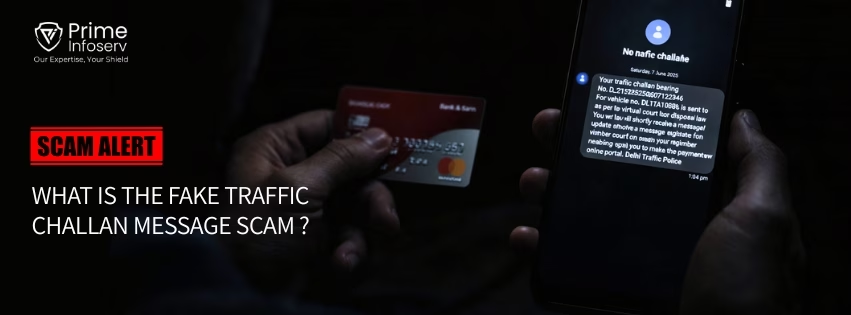
Vehicle owners across India are increasingly receiving Fake Traffic Challan Messages claiming that a traffic violation has been recorded against their vehicle. These messages usually ask the recipient to pay a fine immediately through a link.
In many cases, these links lead to fraudulent websites designed to steal sensitive information. The fake traffic challan scam is becoming a growing example of how cybercriminals use phishing techniques to trick people into revealing personal and banking details.
As more government services, including driving license and traffic-related services, move online, people now expect traffic challans to be delivered digitally. Scammers are exploiting this trust by sending Fake Traffic Challan Message alerts that appear highly legit.
How are Cybercriminals Stealing Money Through Fake Traffic Challan Messages?
The fake traffic challan scam typically follows a simple process. First, the victim receives a message claiming that a traffic violation has been recorded. The message contains a link for immediate payment.
When the user clicks the link, they are redirected to a website that closely resembles an official government portal. These websites are designed to look legitimate, often copying the layout of official platforms.
The site then asks the victim to enter details such as:
- Vehicle number
- Mobile number
- Personal details
- Banking information
- One-Time Password (OTP)
This process is known as information harvesting, where attackers collect sensitive data and use it to access bank accounts or perform fraudulent transactions.
Why Are People Falling for Fake Challan Messages?
One of the main reasons people fall victim to Fake Challan Messages is that the messages look authentic. Cybercriminals often include:
- Real vehicle numbers
- Urgent warnings about fines increasing
- Threats that the vehicle may be seized
When recipients see their vehicle number in the message, they believe it must be genuine. This psychological manipulation is a common social engineering tactic used in phishing attacks.
How To Check If a Traffic Challan Is Real or Fake ?
If you receive a suspicious message about a traffic challan, the safest step is to verify it through official government platforms. Instead of clicking the link in the message, go directly to the official portal and check the challan status using your vehicle number.
You can verify your challan through the Parivahan Sewa website. Simply enter your vehicle number to see whether a challan has actually been issued.
If you are unsure how to check online, you can also visit your nearest RTO office or even ask a trusted cyber café operator to help verify the challan on the official website.
Safety Tips to Avoid Fake Challan Scams
Here are a few quick Safety Tips to Avoid Fake Challan Scams:
- Verify every traffic challan through official platforms.
- Avoid entering sensitive information on unknown websites.
- Check website URLs carefully before making payments.
- Contact authorities if you suspect a scam.
Awareness is one of the most effective defenses against phishing-based fraud.
Conclusion :
Fake challan scams are just one example of how attackers use phishing and social engineering tactics to trick victims. Every day, many people fall prey to such scams, and similar tactics are often used to target employees within organizations. Businesses can significantly reduce this risk by providing phishing simulation training and cybersecurity awareness programs for their workforce.
If your organization wants to strengthen its defenses against phishing attacks, Prime Infoserv offers phishing simulation training and awareness programs.
Contact us today for a quick consultation and learn how to protect your workforce from modern cyber threats. +91 9147712576 or mail : info@primeinfoserv.com