“Fast-growing money often comes with hidden risks”, remember this golden rule when investing in any app or scheme, no matter how lucrative it seems.
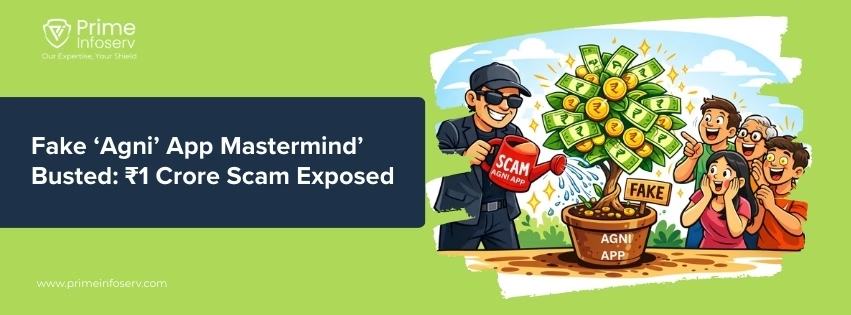
Users of the fake Agni App were recently defrauded of over ₹1 crore through a fake investment mobile app called ‘Agni’. The alleged Fake ‘Agni’ App Mastermind, Sangam Kumar, was arrested in Faridabad, Haryana, after authorities traced the operations and gathered evidence. He reportedly targeted young investors and small savers with promises of unusually high returns, using seminars, fabricated success stories, and the app itself to appear legitimate. This case highlights how scams can exploit human psychology, making the Fake ‘Agni’ App a warning example for anyone considering quick-return investments.
How Users Were Fooled by the Fake ‘Agni’ App
The mastermind, Sangam Kumar, posed as the CEO of the “Agni” app to appear credible and attract young users and small savers. He conducted seminars and presentations across multiple cities, using:
- Professional PowerPoint presentations
- Forged registration documents
- Fabricated success stories
At the start, the app gave victims small returns for actions such as:
- Mobile recharges
- Electricity bill payments
- Watching advertisements
These initial payouts were carefully designed to build trust, convincing users that the app was legitimate. Once confidence was gained, victims were enticed with promises of cars, bikes, and other luxury rewards if they invested larger amounts.
Ultimately, after collecting a substantial sum from multiple victims, the app was abruptly shut down, and Kumar disappeared, leaving behind losses exceeding ₹1 crore.

This scam is a classic example of social engineering, where the perpetrators relied on psychological manipulation rather than hacking or stealing credentials, exploiting trust, greed, and the desire for quick gains.
How Social Engineering, Not Hacking, Was Used to Entice Users into the Fake ‘Agni’ App
The Fake ‘Agni’ App Mastermind case is a classic example of social engineering rather than technical hacking.
There was no complex malware attack.
No system breach.
No OTP theft.
No password cracking.
Instead, the scam relied on manipulating human psychology.
What is Social Engineering & its techniques?
Social engineering is a cybercrime technique where attackers trick people into voluntarily giving away money or sensitive information by exploiting emotions such as:
- Trust
- Greed
- Fear
- Urgency
- Authority bias
Rather than breaking into systems, scammers break into people’s confidence and decision-making process.
How the Fake ‘Agni’ App Used Social Engineering to Trick Victims
In the Fake ‘Agni’ App scam, the psychological manipulation included:
- Authority Manipulation
Posing as a CEO and conducting seminars to appear legitimate. - Trust Building Through Small Rewards
Giving small payouts for mobile recharges, bill payments, and watching ads to create credibility. - Greed Exploitation
Promising fast returns, cars, bikes, and luxury rewards for higher investments. - Social Proof
Using fabricated success stories and testimonials to make the scheme look successful. - Gradual Commitment
Encouraging small investments first, then pushing for larger amounts once confidence was built.
When hackers target computer systems, security software and firewalls can often detect and block their attacks. But social engineering scams work differently — they target human emotions, exploiting greed, trust, and urgency. Unlike technical hacks, there is no antivirus or firewall for misplaced trust, which makes these scams far more dangerous and harder to defend against.
Investigation and Arrest of Fake ‘Agni’ App Mastermind- Sangam Kumar
Authorities traced banking transactions and carried out technical surveillance to locate Sangam Kumar in Faridabad, where he was arrested. Investigations are ongoing to identify:
- Other gang members
- Bank accounts used
- Payment gateways involved
- Server hosting details
- Whether funds were converted into digital assets
Cautionary Lessons for Early Adopters of New Mobile Apps
In today’s era of fast-growing apps, verifying the legitimacy of any investment platform is critical, even for first-time users:
- No investment can promise quick and massive returns, not even through banks.
- Scammers are increasingly tech-savvy, using apps to lure people.
- Always maintain a healthy space of doubt before investing.
Protect Yourself with Awareness
At Prime Infoserv, we believe that awareness is the first step to preventing scams. If you need guidance on ISO, compliance, or cybersecurity audits, connect with us for a free consultancy to safeguard your investments and systems.