
The Digital Personal Data Protection (DPDP) Act, 2023 is bringing data privacy into sharp focus for businesses across India. As organizations prepare for upcoming rules and enforcement, understanding the key requirements is critical. This DPDP Compliance Checklist helps companies evaluate their current data practices, identify gaps, and take the necessary steps to align with regulatory expectations.
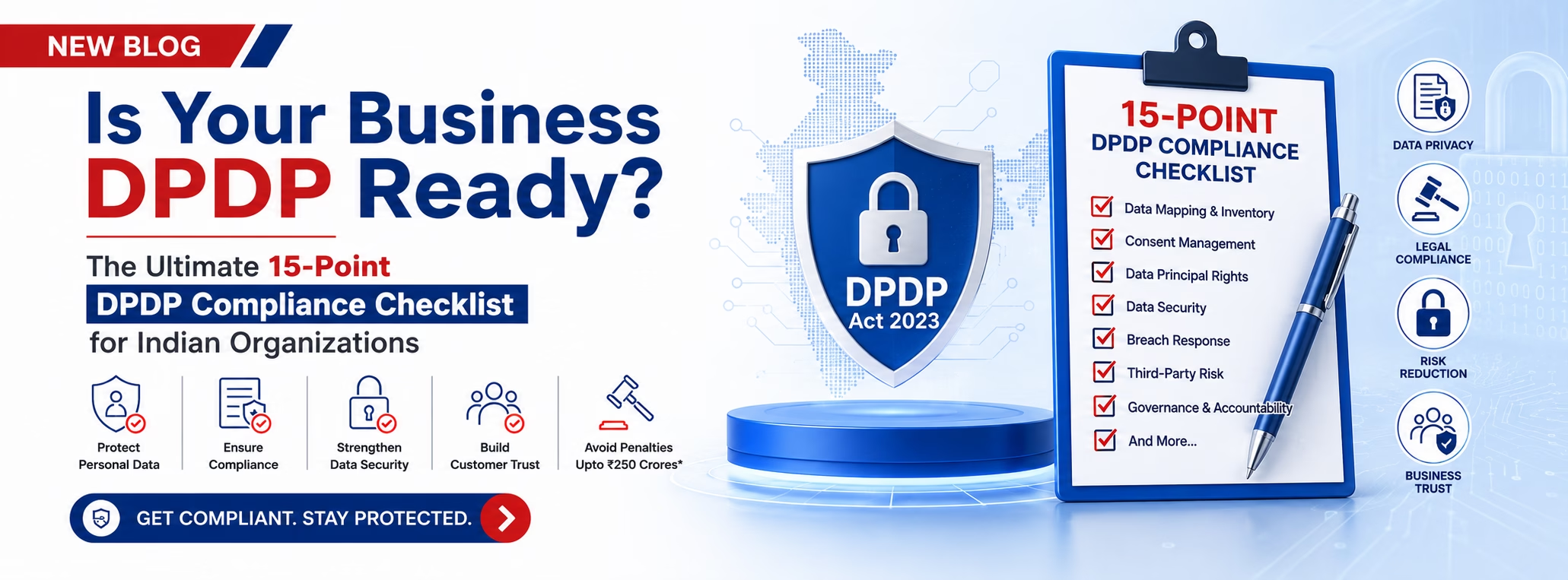
DPDP Compliance Checklist for Companies
To achieve DPDP compliance in India, businesses should evaluate the following:
1. Consent Management
- Are you collecting clear and explicit consent?
- Can users easily withdraw consent?
2. Personal Data Mapping
- Do you know what personal data you collect?
- Where is it stored and who can access it?
3. Purpose Limitation
- Is data used only for its intended purpose?
4. Data Minimization
- Are you collecting only necessary data?
- Are unused records deleted?
5. Privacy Notice
- Is your privacy notice clear and simple?
- Does it explain data usage and user rights?
6. Data Protection Measures
- Is your data secure from breaches?
- Are proper safeguards in place?
7. Breach Notification Process
- Can you report breaches to authorities quickly?
The DPDP Act requires reporting all breaches, unlike many global laws.
8. Data Retention Policy
- Do you delete data after its purpose is fulfilled?
9. Accountability
- Have you assigned responsibility for data protection compliance?
10. Vendor Risk Management
- Are third-party vendors compliant with the DPDP Act?
Key Challenges in DPDP Act Compliance
The DPDP Act is built around lawful and transparent processing of personal data, but implementation is not straightforward.
Major challenges include:
- Lack of structured consent mechanisms
- Poor visibility into stored data
- Over-reliance on legacy systems
A key concern lies within marketing technology, as it heavily depends on collecting, storing, and using customer data.
Many companies currently rely on marketing tools and databases that may not have valid or verifiable consent. Under the DPDP Act, such data may require revalidation, cleanup, or restructuring to meet compliance requirements.
As a result, marketing tools must now ensure:
- Proper consent: You must prove users have given explicit permission. No more “assumed consent”
- Clear purpose: Data collected for one purpose cannot be reused freely
- Easy opt-out: Users must be able to withdraw consent easily
Core Principles of the DPDP Act
The DPDP Act operates on seven guiding principles aimed at enhancing data privacy and protection. Here’s a closer look:
- Lawfulness, Fairness, and Transparency: Personal data must be processed lawfully with proper consent, and companies must inform individuals about the data being collected and its intended purpose.
- Purpose Limitation: Data collected for a specific purpose cannot be used for any other purpose.
- Data Minimization: Only the necessary data for providing services can be collected. Additionally, companies must dispose of the data once its purpose has been fulfilled.
- Accuracy: Companies are obliged to ensure that data remains accurate and up-to-date.
- Integrity and Confidentiality: Personal data must be protected from breaches, ensuring confidentiality and integrity throughout its lifecycle.
- Accountability: Companies must appoint data protection officers to handle grievances and ensure compliance with the Act.
The Act further emphasizes data minimization, purpose limitation, and storage limitation. Digital platforms will have to obtain explicit consent from each user for data collection, future use, and other processing activities. Failure to comply with these principles can lead to hefty penalties of up to ₹250 crore for data breaches, compelling companies to implement robust data protection mechanisms.
Complexities in Compliance
The DPDP Act introduces new compliance obligations that require organizations to adopt more structured and transparent data handling practices.
Key requirements include:
- Reporting of personal data breaches to the Data Protection Board and affected users, as may be prescribed
- Providing clear and accessible privacy notices to users
- Greater accountability in managing and protecting personal data
While the Act has been passed, its provisions will come into effect in phases as notified by the Government. This means organizations will be required to comply once these rules are enforced, often within a limited timeframe.
Delaying preparation until enforcement begins can lead to challenges such as:
- Inability to implement compliant consent and notice mechanisms in time
- Limited visibility into existing personal data and associated risks
- Difficulty in remediating or validating legacy data
- Increased exposure to penalties and regulatory action
These factors can increase operational complexity, especially for organizations handling large volumes of data or relying on legacy systems.
Penalties Under DPDP Act
Failure to comply can lead to severe penalties:
- Up to ₹250 crore for data breaches
- Up to ₹200 crore for failure to report breaches
This makes data protection a critical business priority, not just a regulatory requirement.
How Prime Infoserv Can Assist
Although the Act has been passed, enforcement depends on the final rules. However, the direction is clear—organizations must prepare now.
Immediate steps:
- Conduct a data audit
- Fix consent collection processes
- Clean outdated or non-compliant data
- Strengthen data protection systems
With the transition period fast approaching, companies across industries must act swiftly to establish comprehensive compliance frameworks. At Prime Infoserv, we offer expert guidance on navigating data privacy regulations, including the DPDP Act. Our team specializes in overhauling data management systems, implementing consent mechanisms, and crafting data protection strategies tailored to your unique business needs.
By partnering with Prime Infoserv, businesses can confidently tackle the complexities of compliance, minimizing risks and enhancing data security. Contact Prime Infoserv today to begin your DPDP Act compliance journey, call +91 9147712576 or mail : info@primeinfoserv.com