With the rapid evolution of digital banking, fintech ecosystems, and online financial services, Identity Theft Prevention in 2026 has become a critical priority for both individuals and organizations. As more personal and financial data moves online, cybercriminals are finding new ways to exploit vulnerabilities—not just through advanced attacks, but also by targeting human behavior, weak configurations, and unmonitored systems.
Today, banking, insurance, and investment platforms are among the most targeted sectors. A single compromised identity can lead to unauthorized transactions, fraudulent loans, drained investment accounts, and long-term reputational and financial damage. What makes modern identity theft more dangerous is its subtlety—many attacks go unnoticed until the damage is already done.
As cyber threats continue to evolve and become harder to detect, prevention must shift from reactive to proactive.
Understanding Modern Identity Theft Risks
Unlike traditional hacking, identity theft often involves a combination of techniques such as phishing, social engineering, credential stuffing, and exploitation of exposed APIs or misconfigured systems. Attackers collect small pieces of personal data—from data breaches, social media, or unsecured platforms—and combine them to impersonate individuals.
In many cases, the entry point is surprisingly simple:
- Weak or reused passwords
- Lack of multi-factor authentication (MFA)
- Unpatched applications or outdated systems
- Overshared personal information online
This means both individuals and organizations share responsibility in reducing risk.
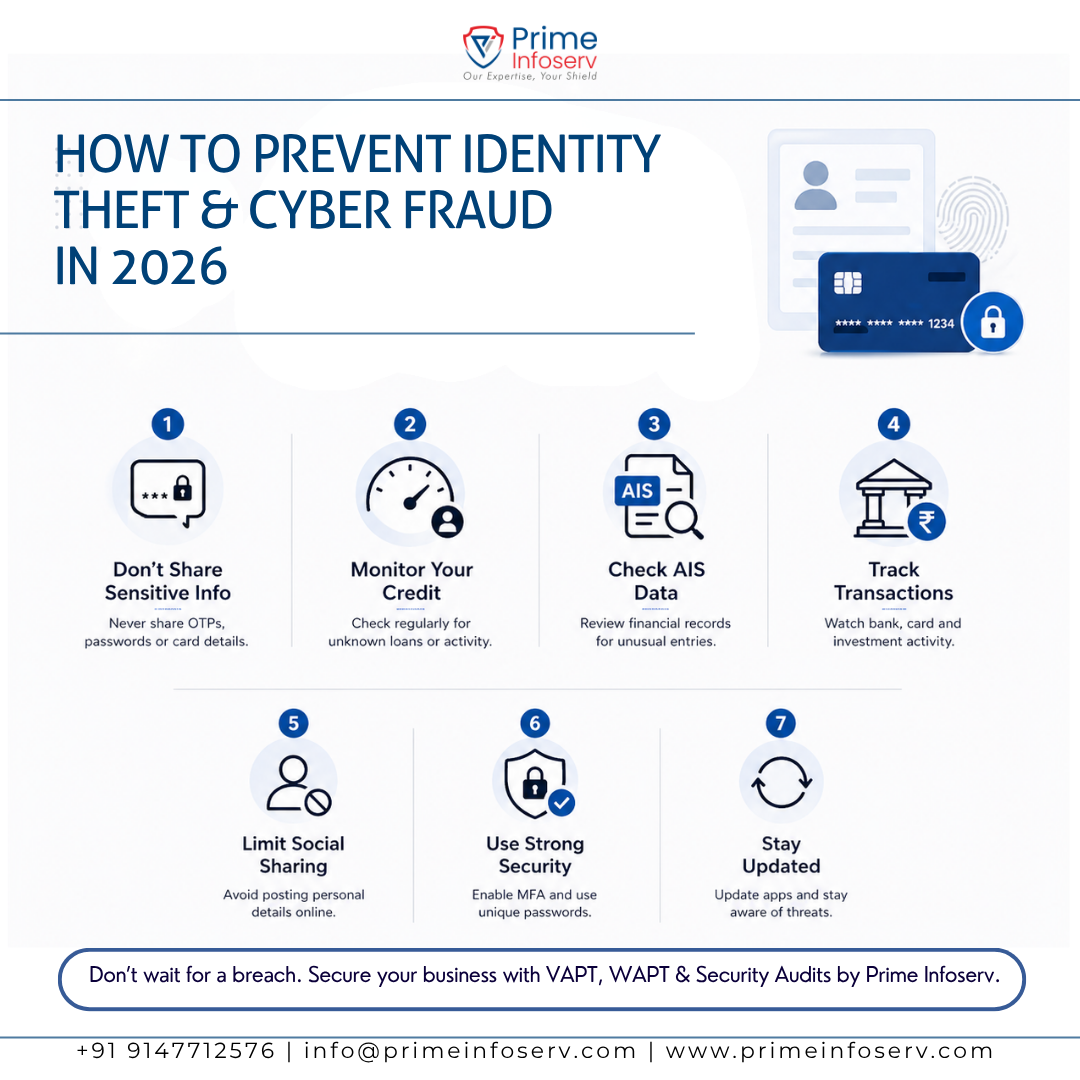
How to Prevent Identity Theft and Cyber Fraud
1. Never Share Sensitive Financial Information
Always protect critical data such as login credentials, OTPs, CVV numbers, and card details. Legitimate financial institutions will never request such information via phone calls, emails, or messages. Any such request should be treated as a red flag.
2. Regularly Monitor Your Credit Profile
Cybercriminals can misuse stolen identities to apply for loans or open new accounts. Regularly reviewing your credit report helps detect unauthorized financial activity early, minimizing potential damage.
3. Track Financial Data Through AIS
Using the Income Tax Department e-Filing Portal, individuals can access their Annual Information Statement (AIS), which provides a consolidated view of income, financial transactions, tax details, and high-value purchases. Monitoring AIS enables quick identification of anomalies or suspicious activity.
4. Continuously Monitor Banking and Investment Transactions
Frequent review of bank statements, credit card usage, and mutual fund transactions is essential. Cybercriminals often test accounts with small transactions before executing larger frauds—early detection can prevent escalation.
5. Limit Personal Information on Social Media
Oversharing personal details such as birthdates, phone numbers, travel plans, or financial milestones can provide attackers with the information needed for identity theft or social engineering attacks.
6. Use Strong Authentication Practices
Enable multi-factor authentication (MFA) wherever possible and avoid reusing passwords across platforms. Strong authentication significantly reduces the risk of unauthorized access.
7. Stay Updated and Vigilant
Regularly update applications, devices, and systems to patch known vulnerabilities. Awareness of current cyber threats plays a crucial role in prevention.
Why Identity Theft Is a Bigger Risk for Organizations
While individuals face direct financial loss, organizations deal with far greater consequences when identity theft occurs at scale. A single vulnerability in a web application, API, or network can expose thousands—or even millions—of customer records.
If a cybercriminal can exploit basic weaknesses to compromise an individual account, the impact of similar vulnerabilities in enterprise environments can be significantly more severe. Data breaches not only result in financial losses but also regulatory penalties, legal consequences, and reputational damage.
Common organizational gaps include:
- Inadequate security testing of applications
- Misconfigured cloud environments
- Lack of continuous monitoring and threat detection
- Weak access control mechanisms
Identity theft is no longer a distant threat—it is a present and growing risk in an increasingly digital world. As cybercriminals continue to refine their tactics, relying on awareness alone is not enough. A combination of vigilance, secure practices, and robust cybersecurity measures is essential to stay protected.
How Prime Infoserv Helps Mitigate Identity Theft Risks
At Prime Infoserv, we help organizations proactively identify and eliminate vulnerabilities that could lead to identity theft and data breaches. Our services are designed to simulate real-world attack scenarios and strengthen overall security posture.
Our Key Services Include:
- Vulnerability Assessment & Penetration Testing (VAPT)
- Web Application Penetration Testing (WAPT)
- Mobile Application Penetration Testing (MAPT)
- Configuration & Security Audits
- Cybersecurity Maturity Assessment
Our approach focuses on proactive defense—helping organizations reduce risk, enhance resilience, and protect sensitive customer data from evolving cyber threats. Don’t wait for a breach to expose vulnerabilities in your systems.
Whether you’re handling customer financial data, running digital platforms, or scaling your online services—your security posture directly impacts your business risk.
Take the first step today:
Get a comprehensive security assessment from Prime Infoserv and uncover hidden vulnerabilities before attackers do. Call: +91 9147712576 or mail : info@primeinfoserv.com