

Article
Introduction
Cybersecurity threats are becoming increasingly sophisticated, and even well-known websites are not immune to attacks.
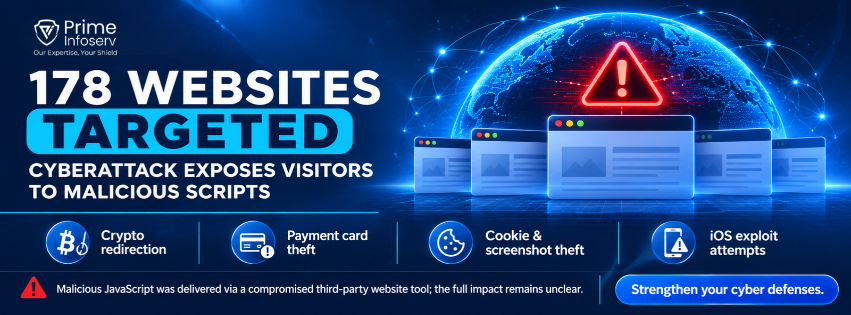
In a recent cyberattack reported on November 17, 2026, malicious JavaScript was delivered to visitors of websites associated with 178 organisations across different industries. The affected organisations included prominent names such as CNN, BBC, Zoom, HSBC, Salesforce, Equifax and IKEA.
According to security researcher Scott Helme, the malicious scripts were distributed through Optimizely, a website optimisation and experimentation platform.
This incident highlights an important cybersecurity concern: attackers do not always need to compromise an organisation's primary infrastructure to put its customers and website visitors at risk.
What Happened in the Cyberattack?
The reported attack involved malicious JavaScript being injected into scripts associated with Optimizely.
Businesses commonly use third-party platforms like Optimizely to improve website functionality, conduct experiments and analyse visitor behaviour.
However, when a trusted third-party service becomes compromised, malicious code can potentially reach multiple websites that depend on it.
According to the investigation, researchers identified 188 infected scripts associated with 178 organisations after examining 1,611 scripts.
The malicious code was designed to perform several activities, including:
Redirecting cryptocurrency payments to attackers' wallets.
Capturing payment card information entered into website forms.
Stealing browser cookies and screenshots.
Delivering exploit code targeting iPhones and other Apple devices.
The full extent of successful exploitation and the number of affected users remained unclear in initial reporting.
4 Major Cybersecurity Risks Highlighted by This Attack
1. Cryptocurrency Payment Redirection
The malicious scripts were designed to identify cryptocurrency wallet addresses displayed on websites and replace them with attacker-controlled addresses.
This creates a serious financial risk because users may unknowingly send their cryptocurrency payments to the wrong wallet.
2. Payment Card Information Theft
Another concerning capability involved capturing payment card information entered into website forms.
If successful, such activity could expose sensitive financial information and put customers at risk of fraudulent transactions.
3. Browser Cookie and Screenshot Theft
Browser cookies can contain valuable session-related information. If stolen and misused, they may help attackers access user accounts or sensitive browsing sessions.
The reported scripts were also designed to capture screenshots, potentially exposing information displayed on affected webpages.
4. Potential Attacks on Apple Devices
The malicious code also attempted to deliver exploit kits targeting iOS devices.
This highlights how website-based attacks can extend beyond the website itself and potentially threaten the devices used by visitors.
Why Are Third-Party Integrations a Cybersecurity Concern?
Modern businesses depend on several external services to operate their digital platforms.
These may include:
Website analytics tools
Marketing automation platforms
Customer relationship management systems
Payment gateways
Advertising scripts
Website optimisation tools
External APIs and plugins
Although these integrations improve efficiency, they can also introduce additional security risks.
If attackers compromise a trusted third-party service, malicious code or unauthorised changes may reach multiple connected organisations.
This is why businesses need to look beyond their internal networks and evaluate the security of their entire digital supply chain.
How Can Businesses Protect Themselves?
The incident serves as a reminder that cybersecurity requires continuous monitoring, proactive security measures and strong third-party risk management.
Here are some important steps businesses should consider:
1. Conduct Regular Security Audits
Review website scripts, integrations, plugins and third-party services regularly to identify suspicious changes or unauthorised activity.
2. Implement Strong Access Controls
Restrict access to website management platforms and third-party tools. Use multi-factor authentication and regularly review user permissions.
3. Monitor Third-Party Dependencies
Maintain an inventory of external services and regularly assess their security practices, access permissions and potential vulnerabilities.
4. Use Content Security Policies (CSP)
Implement and maintain appropriate Content Security Policies to control which sources can execute scripts on your website.
5. Monitor Suspicious Activities
Use security monitoring solutions to identify unusual behaviour, unauthorised script modifications and potential data exfiltration.
6. Maintain an Incident Response Plan
Prepare a response strategy that defines how to identify, contain, investigate and recover from cybersecurity incidents.
The Bigger Lesson: Cybersecurity Cannot Be an Afterthought
The cyberattack targeting 178 organisations demonstrates how interconnected today's digital ecosystem has become.
A vulnerability in one third-party platform can potentially create security risks across multiple organisations, industries and customer bases.
Businesses should not assume that using trusted platforms automatically guarantees security.
Instead, organisations must continuously evaluate their security posture, monitor external dependencies and prepare for emerging cyber threats.
Final Thoughts
Cybersecurity is no longer limited to protecting servers, networks and applications. It also involves securing third-party integrations, protecting customer information and maintaining trust across the entire digital ecosystem.
The latest incident is another reminder that proactive security measures are essential for businesses of every size.
At Prime Infoserv, we believe stronger cybersecurity starts with better visibility, continuous monitoring and a proactive approach to managing digital risks.
Don't wait for a cyberattack to expose your weaknesses. Strengthen your security posture today.
Explore cybersecurity solutions with Prime Infoserv: