
Article
Introduction
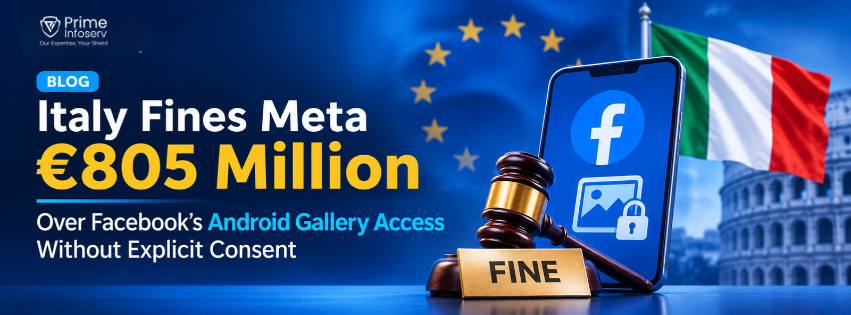
In a major development in the world of digital privacy and data protection, Italy has fined Meta Platforms Ireland Limited €805 million over Facebook's Android feature that accessed users' smartphone photo galleries without obtaining specific, informed consent.
The decision, announced by Italy's Data Protection Authority on November 14, 2026, highlights growing concerns about how technology companies collect, access, and process personal information.
This case serves as an important reminder that protecting user privacy is not simply a technical responsibility; it is a fundamental requirement for every organisation operating in today's digital environment.
What Led to the €805 Million Fine?
The controversy revolves around a Facebook feature called "Get suggestions from gallery when browsing Facebook."
Introduced in 2023, this feature was designed to suggest photos and videos from users' Android smartphone galleries that they could share on Facebook.
However, Italy's Data Protection Authority found that the application accessed users' photos, videos, and associated metadata without obtaining sufficiently specific consent or adequately informing users about the purpose of the access.
According to the investigation, the permission request was presented as a general authorisation covering multiple app functions. Users were not clearly informed that accepting it could also enable gallery suggestions.
The regulator also found that the feature was enabled by default.
These findings raised serious concerns about transparency, user awareness, and control over personal information.
Why Is This Decision Significant?
Smartphones contain some of the most personal information about individuals, including photographs, videos, documents, and other private data.
When an application requests access to such information, users should clearly understand:
What information the application wants to access.
Why the information is required.
How the information will be used.
Whether access is optional.
How permission can be withdrawn.
A general permission request should not leave users uncertain about what they are authorising.
The Italian regulator emphasised that accessing information stored on a smartphone requires free and informed consent under the applicable privacy framework.
What Actions Must Meta Take?
Along with imposing the €805 million penalty, Italy's Data Protection Authority directed Meta to make changes to its Facebook gallery-access feature.
The key requirements include:
Separate consent: Meta must obtain specific consent for the gallery-suggestion feature.
Clear communication: Users must be informed about why gallery access is required and how the feature works.
Disabled by default: The feature must remain switched off by default, including for users who previously granted general permission.
Regulatory updates: Meta must report the steps initiated and the measures implemented to the authority within the specified timelines.
The regulator indicated that approximately 20 million Android users in Italy could be affected by the issue.
Meta has reportedly disagreed with the decision and plans to appeal the fine.
The Bigger Lesson: User Privacy Is Not Optional
This incident highlights an important issue in the modern digital ecosystem: convenience should never come at the cost of user privacy.
Applications frequently request access to cameras, microphones, contacts, locations, and photo galleries. However, users should always have a clear understanding of why these permissions are needed.
Organisations must adopt responsible data-handling practices and ensure that privacy is integrated into every stage of product development.
Some essential principles include:
Transparency: Clearly communicate how personal information is collected and used.
User Consent: Obtain informed and specific permission before accessing personal data.
Data Minimisation: Collect and process only the information necessary for a particular purpose.
Access Control: Restrict access to sensitive information through appropriate permissions.
Privacy by Design: Integrate privacy and security considerations into technology from the beginning.
How Businesses Can Strengthen Their Data Privacy Practices
The Meta case is a reminder for businesses of every size that digital trust depends on responsible information management.
Companies should regularly review their data collection policies, application permissions, access controls, and cybersecurity practices.
Here are some important steps businesses can consider:
Conduct regular privacy and security assessments.
Implement strong identity and access management.
Establish clear data protection policies.
Educate employees about data privacy and security awareness.
Monitor applications and systems for unauthorised access.
Follow applicable data protection and regulatory requirements.
A proactive approach to cybersecurity can help organisations reduce risks, protect sensitive information, and build stronger relationships with customers.
Conclusion
Italy's €805 million fine against Meta sends a strong message to the global technology industry: user privacy, transparency, and informed consent must remain at the centre of digital innovation.
As technology continues to evolve, organisations must recognise that protecting personal information is not just about meeting regulatory requirements. It is about respecting users, maintaining trust, and creating a safer digital environment.
At Prime Infoserv, we believe that cybersecurity begins with awareness, responsible technology practices, and a strong commitment to digital protection.
Your Data. Your Consent. Your Control.
Stay informed. Stay protected. Stay secure.
— Prime Infoserv